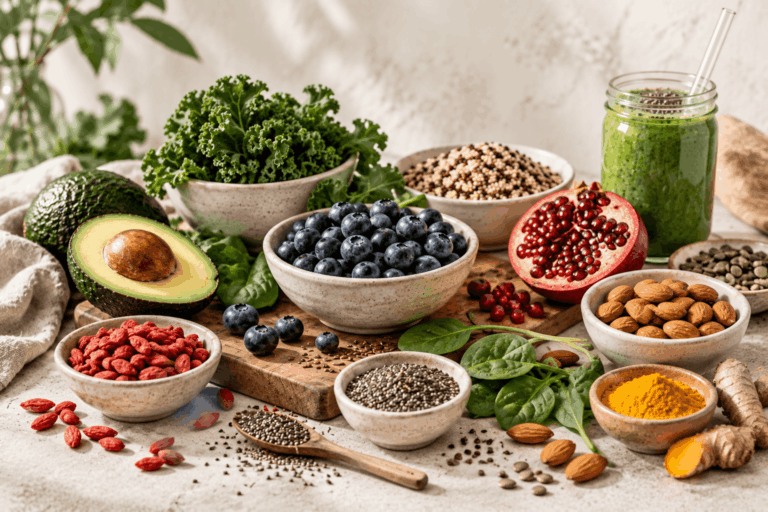

Diets promise a lot: rapid weight loss, more control, a “new you”.
But the reality is different for most people. Instead of lightness, frustration, feelings of guilt and a permanently disturbed relationship with your own body arise.
And now comes the uncomfortable truth:
👉 You don't fail because of the diet – the diet fails because of you.
In this article we look honestly, clearly and without sugar-coating why diets often do more harm than good in the long term – and what really works instead.
1. Diets work against your body – not with it
Our body is not a computer that can simply be reprogrammed. It is a highly intelligent system that wants one thing above all: survive.
If you suddenly deprive him of food or ban entire food groups, he switches into mode Economy mode:
- The metabolism slows down
- Hormones become imbalanced
- Hunger and satiety signals are distorted
What follows is not a “failure,” but a biological protective reaction. Your body thinks it has to save you from starvation.
💡 Conclusion: Diets create stress – both physical and hormonal.
2. The yo-yo effect is not a myth, but a program
Almost every diet ends the same way:
- Initial successes
- It will be difficult to hold on
- Weight comes back – often more than before
Why?
Because after the diet your body tries to prepare itself for the next “emergency time”. It stores more efficiently, burns less and tells you particularly loudly: Eat!
The problem is not your will – but the diet system itself.
👉 In the long term, diets don't change your behavior, they only change your weight – in the short term.
3. Diets destroy the natural feeling of hunger
At some point many people no longer know:
- Am I hungry – or is that forbidden?
- Am I full – or can I still eat?
- Am I eating out of pleasure – or out of fear?
Diets teach us no longer trusting your own body, but rules, calorie counts or plans.
The result:
- Food becomes mental
- Enjoyment is replaced by control
- Feelings of guilt determine decisions
And this is exactly where the real damage begins – mentally, not physically.
4. Abstinence creates cravings – always
The more you forbid yourself something, the greater the desire for it becomes.
This is not weakness – this is psychology.
A food suddenly becomes:
- "forbidden"
- "bad"
- "dangerous"
And that's exactly why it becomes emotionally charged.
When you “get weak” it often happens:
“It doesn’t matter now anyway.”
💥 Welcome to the cycle of control → loss of control → guilt.
5. Diets shift the focus away from health
Many diets talk about “healthy”.
In reality, it's often just about:
- Weight
- Look
- Numbers on the scales
Important questions are left behind:
- How is your gut?
- How stable is your energy level?
- How are you feeling mentally?
- Do you have strength, focus, joy of life?
👉 Health is more than just a smaller body size.
6. The greatest damage: the disturbed relationship with yourself
Perhaps the most important point.
Diets subtly convey:
- Your body is a problem
- You have to control yourself
- You are only “good” if you follow the rules
In the long term this can lead to:
- Self-doubt
- eating disorders
- Constant stress
- emotional eating
lead – even if “everything looks okay” on the outside.
7. What really helps (and is sustainable) instead
The solution is not a new diet.
The solution is a change of perspective.
Instead of giving up:
👉 Understand
- What does your body really need?
- Which foods are good for you?
- What stresses you out – and why?
Instead of control:
👉 Connection
- Eating according to hunger and satiety
- Regular meals
- Eat enough – not too little
Instead of perfection:
👉 Suitability for everyday use
- Small steps
- realistic changes
- no “all or nothing”
8. Health starts in the head – but doesn't end there
Mindset is important.
But thinking alone is not enough.
Your body needs:
- Nutrients
- regularity
- Relief instead of constant stress
If head and When bodies work together, something new is created:
✨ Trust instead of fighting
✨ Stability instead of extremes
✨ Health instead of dieting
9. Why diets are particularly harmful to women
Women in particular are particularly often affected by diet consequences. The reason lies not only in social pressure, but also in the hormonal fine-tuning of the female body.
Constant calorie reduction can:
- affect the cycle
- Reinforce PMS
- Worsen cravings
- increase the stress hormone cortisol
Many women notice at some point:
You eat “healthily” but still gain weight, feel exhausted or constantly under pressure. This is not a coincidence – but a reaction to years of restrictions.
👉 A body under constant stress stores – it doesn’t burn.
10. Diets and gut health – an underestimated connection
Another point that is rarely discussed: Diets put a strain on the intestines.
A one-sided diet, extreme rules or constantly changing concepts can:
- unbalance the intestinal flora
- Increase digestive problems
- promote flatulence, constipation or diarrhea
A disturbed intestine in turn influences:
- your immune system
- your energy level
- your mood
💡 Health doesn't start on the scales – but in the stomach.
11. Why “discipline” is the wrong goal
Many people believe they simply need to be more disciplined.
But discipline against your own needs is not success – it is Self-override.
If you constantly fight against hunger, tiredness or cravings, you will lose in the long term:
- Body confidence
- inner peace
- Joy of eating
👉 Sustainable health is needed structure, not hardness.
12. Food is not a problem – food is a signal
Food is often seen as a trigger:
“I eat too much.”
But the actual question is often different:
- Am I eating out of stress?
- Am I eating out of exhaustion?
- Am I eating because I deny myself breaks?
Diets treat the symptom – not the cause.
Only when you start eating as information Instead of seeing it as a mistake, change occurs.
13. The Silent Cycle: Diets and Emotional Eating
Many people develop emotional eating only through diets.
The process is almost always the same:
- Strict rules
- internal pressure
- Loss of control
- Feelings of guilt
- starting a diet again
A cycle that has nothing to do with a lack of willpower – but with Overwhelm.
👉 The more relaxed your approach to food, the less power it has over you.
14. Health is not a project – it is a process
Diets sell health as a short-term goal:
“In 30 days…”
“In 4 weeks…”
But real health comes slowly:
- through repetition
- through patience
- through introspection
Small changes you really live, are more valuable than perfect plans that you cancel after two weeks.
15. Why your body doesn’t need a “reset.”
Many diets advertise a restart, detox or reset.
Your body doesn’t need a fresh start – it needs Relief.
- eat regularly
- sleep enough
- Reduce stress
- Supply nutrients
This is not a trend. This is biology.
Final thought: Freedom is healthier than control
The biggest gain from ditching diets isn't losing weight –
but more Freedom.
Freedom:
- to eat without fear
- to trust your body
- not to constantly optimize yourself
And that's exactly where health that lasts begins.
Notice: The content on this website is based on personal experiences and research and does not constitute medical or therapeutic advice. If you have any health or psychological complaints, please contact a doctor or a qualified specialist!