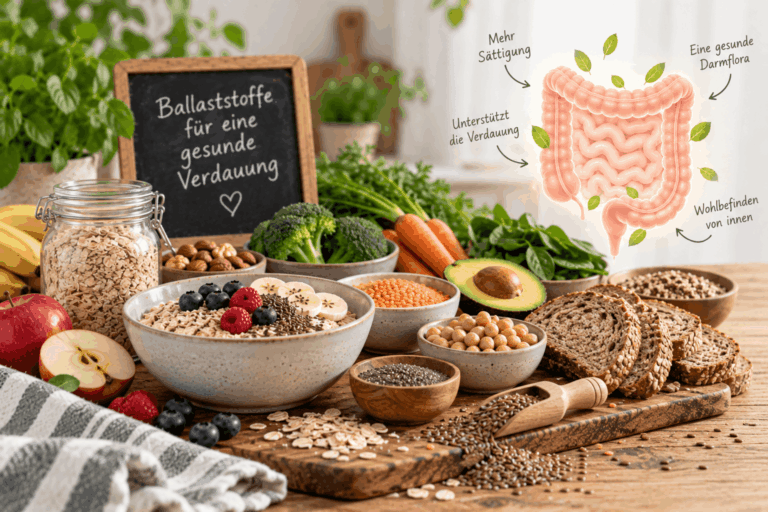
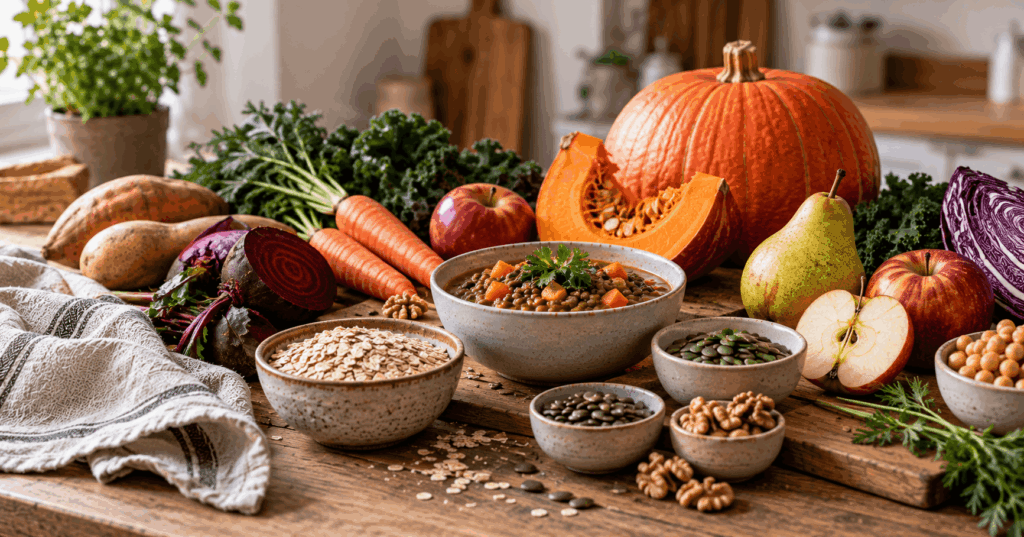
Fall not only brings cooler days and colorful leaves, but also a wide variety of seasonal foods. Pumpkin, apples, pears, cabbage, beetroot, oats and nuts are now appearing more often on the plate again – and many of them can be wonderfully integrated into a varied, gut-friendly diet.
There is no need for a complicated intestinal cleanse or a long list of supposed superfoods. What is much more important is a diet that is as varied as possible and regularly contains various plant-based foods.
Autumn in particular makes it easy to try out new things. Here you will find 15 autumn foods, which can be interesting components of a gut-friendly diet due to their nutrients and versatility.
What does gut-friendly nutrition actually mean?
A gut-friendly diet does not mean that there is a specific list of foods that are equally suitable for every person.
Our digestive system is individual. What one person tolerates easily may cause discomfort for another. Therefore, you should not only look at which food is theoretically “good for the intestines”, but also at how your own body reacts to it.
Basically, a varied diet with enough fiber, plant-based foods and enough fluids plays an important role. Exercise, sleep and dealing with stress are also part of a holistic view of intestinal health.
🎃 1. Pumpkin
Pumpkin is probably one of the foods most associated with fall. Whether Hokkaido, butternut or nutmeg pumpkin – the different varieties can be prepared in a variety of ways.
Pumpkin provides, among other things, fiber and can therefore complement a varied diet. Its versatility is particularly practical: it can be used to prepare soups, baked vegetables, curries, stews or even breakfast ideas.
Pumpkin seeds are also interesting and add additional nutrients and fiber to the menu.
🍎 2. Apples
The apple is a real autumn classic. It can be easily eaten on the go, integrated into breakfast or prepared warm.
Apples contain, among other things, fiber. The peel in particular provides some of this, which is why thoroughly washed apples can often be eaten with the peel on.
Whether in porridge, as a snack or together with natural yoghurt and nuts – apples can be easily integrated into everyday life.
🍐 3. Pears
Pears are also one of the typical autumn fruits. They contain fiber and can provide more variety.
Their sweet taste goes perfectly with oatmeal, nuts or natural yogurt, for example.
If you regularly alternate different types of fruit, you will automatically get a greater variety on your plate.
🌾 4. Oats
Oatmeal is an easy way to add fiber to a meal.
A warm porridge with apple, pear, linseed and walnuts, for example, is a simple autumn breakfast.
Oats contain, among other things, soluble fiber such as beta-glucans. At the same time, it can be used in a variety of ways – from breakfast to homemade muesli to hearty dishes.
🥕 5. Carrots
Carrots are available all year round, but also fit perfectly into autumn cuisine.
They provide fiber and can be eaten raw, boiled, steamed or prepared in the oven.
Carrots are particularly useful in soups and stews. This means they can be combined with other vegetables and provide more variety.
❤️ 6. Beetroot
With their strong color, beetroot brings variety to the autumn plate.
It contains fiber and various micronutrients. For example, you can roast them in the oven, add them to salads or use them in soups.
Especially when combined with nuts, legumes or whole grain products, it creates a varied meal.
🥬 7. Cabbage
Cabbage comes in many different varieties: white cabbage, red cabbage, savoy cabbage, kale or Brussels sprouts.
Many types of cabbage provide fiber and can therefore be part of a varied diet.
If you have rarely eaten cabbage before, you can ease into it slowly. Larger amounts can initially cause flatulence in some people.
The same applies here: not every food has to be equally well tolerated by every person.
🍠 8. Sweet potatoes
Sweet potatoes are a versatile side dish for fall cooking.
They can be baked, boiled or used as an ingredient in soups and bowls. Thanks to their natural sweetness, they can also be combined well with savory ingredients.
Together with vegetables, legumes and a protein source, this creates a balanced meal.
🫘 9. Lentils
Lentils are legumes and are an interesting plant source of protein and fiber.
They go wonderfully in soups, stews or salads, especially in autumn.
If you rarely eat legumes, you should slowly increase the amount. A sudden large portion can cause digestive problems in sensitive people.
🫘 10. Chickpeas
Chickpeas also provide fiber and vegetable protein.
They are suitable for salads, curries, soups or oven dishes. Particularly practical: Cooked chickpeas from a jar or can can be a quick way to incorporate more legumes into your everyday life.
🌰 11. Walnuts
For me, walnuts are one of the most beautiful autumn ingredients.
Among other things, they provide fiber and unsaturated fatty acids and can complement a varied diet.
A small portion goes well with porridge, natural yoghurt, salads or fried vegetables, for example.
🎃 12. Pumpkin seeds
Pumpkin seeds are not just the seeds from the pumpkin, but also a practical ingredient for everyday life.
You can sprinkle them over soups, salads or porridge or use them together with other nuts and seeds.
They provide, among other things, fiber, protein and minerals.
🌱 13. Flaxseed
Flaxseeds can also help make your diet richer in fiber.
Crushed linseeds can be stirred into porridge, yoghurt or smoothies, for example.
It is important to ensure adequate fluid intake. As with all fiber-rich foods, if you are currently eating little fiber, a gradual increase is usually more pleasant.
🥔 14. Potatoes
Potatoes are sometimes underestimated. They can be an uncomplicated basis for many autumnal dishes.
Boiled potatoes, baked potatoes or potatoes in a vegetable pan can be combined with numerous other foods.
It is less important to view potatoes as a single “intestinal food” than to see them as part of a varied diet.
🥬 15. Sauerkraut
Sauerkraut is created through fermentation and can be an interesting addition to the diet.
Depending on the manufacturing process, fermented foods can contain different microorganisms. Sauerkraut also goes well with many classic fall dishes.
If you rarely eat fermented foods, you can start with small amounts and see how your body reacts.
🍂 This is how you can combine the 15 foods in everyday life
The nice thing about these foods is that you don't have to make complicated dishes out of them.
A few simple combinations:
Breakfast:
Oatmeal + apple + flax seeds + walnuts
Lunch:
Pumpkin + lentils + carrots + herbs
Snack:
Pear + a small portion of nuts
Dinner:
Potatoes + oven-roasted vegetables + sauerkraut
Fall Bowl:
Sweet potato + chickpeas + beetroot + pumpkin seeds
This automatically creates more variety without you having to constantly try out new recipes.
Do you have to eat all 15 foods?
No. This is actually an important point.
Gut health shouldn’t become another to-do list. You don't have to eat pumpkin every day or add flax seeds to your breakfast every morning.
This is much more important Diversity over a longer period of time.
If you eat apples today, pears tomorrow, oats the next day and different types of vegetables later, you will create a more varied diet.
And the same applies to fiber: more is not automatically better. If your body is not used to larger amounts, a very rapid increase can lead to bloating or other digestive problems.
Your fall doesn't have to be perfect
It's completely okay to eat cake, drink hot chocolate, or spend a cozy evening with your favorite meal in the fall.
A gut-friendly diet does not mean that every meal has to be optimized to be as healthy as possible.
It makes much more sense to go to that The entirety of your diet to look.
A varied menu, sufficient fluids, exercise and sufficient rest form a much better basis than strict rules.
Conclusion
Autumn offers numerous foods that can be wonderfully integrated into a varied and fiber-rich diet. Pumpkin, apples, pears, oats, carrots, beets, cabbage, sweet potatoes, lentils, chickpeas, walnuts, pumpkin seeds, flax seeds, potatoes and sauerkraut are just a few possibilities.
You don't have to make it a complicated bowel routine. Start with the foods you like, try new things and pay attention to how your body reacts to them.
Because Intestinal health does not start with perfection, but with many small, everyday decisions. 🍂