Gratitude as an underestimated power
Imagine waking up in the morning and before you check your phone or think about your to-do list, you take 30 seconds to think of three things you are grateful for. Suddenly the day begins differently: lighter, more positive, more peaceful.
Gratitude is more than a feeling – it is an attitude. Those who practice gratitude change their perception and even the way their brain functions in the long term. In this article you will learn why gratitude is so powerful, how it promotes your health and well-being, and which exercises will help you firmly anchor gratitude in your everyday life.
What does gratitude mean? actually?
Gratitude is the conscious recognition of the good in our lives – no matter how small or large. It doesn't mean denying problems or always having to be happy. Rather, it's about seeing the positive aspects despite challenges.
Psychologists describe gratitude as one of the “key strengths” that is closely linked to happiness, satisfaction and resilience.
Gratitude from a scientific perspective
Neuroscience shows that gratitude activates areas of the brain that are associated with reward, motivation and well-being – especially the prefrontal cortex and the Nucleus accumbens. Happiness hormones like Dopamine and Serotonin poured out.
👉 This means that if you practice gratitude regularly, you are literally training your brain for positivity.
Studies from the University of California found that people who kept a gratitude journal felt happier after 10 weeks, had fewer stress symptoms and even had fewer doctor visits.
Why gratitude changes your life
Gratitude has an impact on three levels:
• Physically: Lowers stress hormones, improves sleep, strengthens the immune system.
• Emotionally: Promotes optimism, resilience and satisfaction.
• Social: People who show gratitude have deeper relationships and seem more personable.
💡 Gratitude is like a muscle: the more you train it, the stronger it becomes.
Exercises for your everyday life
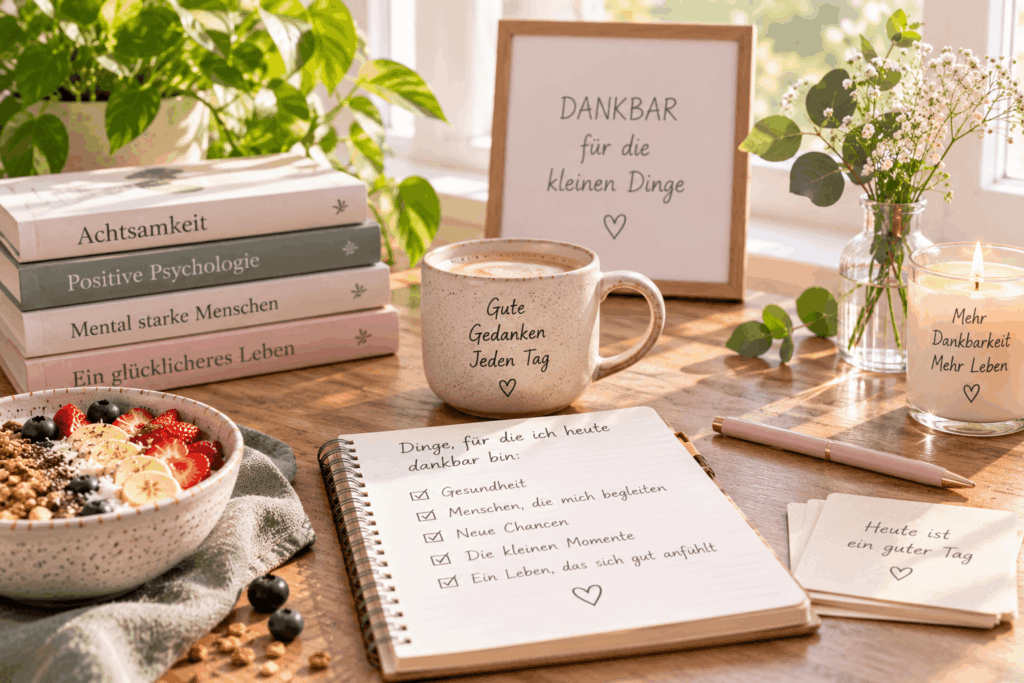
📝 Gratitude journal
Write down 3 things you are grateful for every night. Important: Be specific (“my daughter’s hug this morning” instead of just “family”).
⏳ 60-second gratitude break
Sit down for 1 minute, take a deep breath and list 3 things in your head that are nice right now.
💌 Gratitude letter
Write a letter to a person you've never really said "thank you" to. Even if you never send it, the effect on your heart is great.
🌿 Gratitude in everyday life
• While eating → pause briefly: “Thank you for filling me up.”
• Before sleeping → devote final thoughts to the positive.
• In stressful situations → ask: “What can I value despite everything?”
Frequently asked questions about gratitude (FAQ)
1. When do you first notice the effects?
Often after just a few days – small moments of peace or contentment. Long-term changes become apparent after 4-6 weeks of regular practice.
2. Do I always have to write down gratitude?
No, but writing increases the effect. Thoughts are fleeting, words on paper leave a deeper impression.
3. Can you practice too much gratitude?
Not really – the important thing is to remain authentic. Forced gratitude (“I must being grateful”) can create pressure.
4. Does gratitude also help in crises?
Yes, especially in difficult times, gratitude can provide stability – not because problems disappear, but because we also perceive resources.
5. What do I do if I can't think of anything?
Start small: “I breathe, I have a bed, I have water.” Even the things that are taken for granted are a gift.

How can you show gratitude?
Showing gratitude doesn't have to be complicated. There are many small gestures and habits that can help you express gratitude:
• Words of appreciation: A simple “thank you” can go a long way. Whether in a personal conversation or in writing – sharing your gratitude with other people is a strong sign of appreciation.
• Gratitude diary*: Many people report the positive effects of keeping a gratitude journal. By writing down three things you are grateful for every day, you train your brain to notice the positive.
• Pay attention: Gratitude is expressed not only through words but also through actions. By consciously listening to other people, recognizing their needs, and giving them your time, you show gratitude in a deeper, non-verbal way.
Practical example: How gratitude changed my life
A few years ago I started keeping a gratitude journal every evening. At first I found it difficult to see beyond “normal” things. But after a few weeks I noticed that I automatically noticed more positive things in everyday life. Even on stressful days, there were small moments that lifted me up – like a stranger's smile or an unexpected call from a friend.
👉 Today, gratitude is no longer just an exercise for me, but an inner compass.
What gratitude does to us
The psychological and physiological effects of gratitude are profound. In addition to activating the reward system in the brain and improving emotional well-being, there are other positive effects:
• Better sleep: Studies show that people who regularly practice gratitude sleep better. They go to bed more relaxed because they end the day with positive thoughts.
• Strengthening the immune system: Gratitude can strengthen the immune system as it helps reduce stress, which often leads to physical discomfort.
• Increased self-esteem: Those who focus on the positive aspects of their life strengthen their self-esteem and feel less influenced by external circumstances.
Why should you write down gratitude?
Writing down gratitude increases the effect. It helps to be more conscious about the positive aspects of life and to perceive them more clearly. Many people report that they are through a Gratitude journal* Have not only become happier, but also more resilient to stress and negative experiences. Writing down gratitude anchors gratitude deeper in your consciousness and makes it a permanent habit.
When should you practice gratitude?
There is no “right” time to practice gratitude – it is useful at any time. However, it can be helpful to reserve special times in your daily routine. Many people find it helpful to take a few minutes in the morning or evening to consciously focus on gratitude. Mornings can help you start the day with a positive attitude, while in the evenings reflecting on your day can help you go to sleep with a feeling of contentment.
How do animals like dogs show gratitude?
Not only people, animals also show gratitude in their own way. Dogs, for example, express their gratitude through physical proximity, affection and gestures such as wagging their tails or bringing toys. They show us that gratitude doesn't always have to be verbal – we can also express and receive deep gratitude through small gestures.
🌍 Bonus: Gratitude in different cultures
• Buddhism: Gratitude is a key to compassion and mindfulness.
• Christianity: Gratitude is firmly established in prayers and psalms.
• Japanese culture: “Arigatou” (thank you) is deeply rooted in everyday life and language.
This shows: Gratitude is a universal principle that connects people all over the world.
Small affirmations for everyday life
• “I am grateful for what I have as I pursue what I want.”
• “Gratitude turns what I have into enough.”
• “Every day gives me little moments to marvel.”
👉 Write your favorite affirmation on a piece of paper and hang it on the mirror.
Conclusion: Gratitude as a daily ritual
Gratitude is one of the most powerful practices you can incorporate into your life. Not only does it change your mindset, but it also has a positive impact on your health, your relationships and your general well-being. By consciously practicing gratitude and integrating it into your everyday life, you can live a happier, healthier and more satisfied life in the long term.
The art of gratitude lies in practicing it daily – even in difficult moments. It allows you to look at life from a more positive perspective and focus on what really matters. Gratitude is a life-changing force that helps you live happier and more fulfilled lives.
Just start practicing your gratitude right away!*
Also read similar posts like: Why self-care is so important
*I use affiliate links on this site through which I receive a small compensation if you purchase something. Changes for you nothing on the price, but you help me continue to provide helpful content!