Pilates has long been more than just a fitness trend – it is a method that brings body and mind into balance, relieves pain and strengthens the body. But how exactly does Pilates work, who can do it and why is it so effective? In this article we answer the most important questions about Pilates.
Who invented Pilates and how did it come about?
Pilates was created by Joseph Hubertus Pilates developed by a German who was born in Mönchengladbach in 1883. As a child, he suffered from asthma, rickets and rheumatic fever, which motivated him to look for ways to strengthen his health. Inspired by yoga, gymnastics and Asian martial arts, he developed a training system that strengthens the body and promotes mobility. During World War I he worked in an internment camp, where he further developed his method of rehabilitating injured soldiers. He later moved to the USA and opened his first Pilates studio in New York.
Why is Pilates so effective?
Pilates is particularly effective because it targets the deep muscles – the muscles that are essential for a stable posture and a healthy back. The exercises not only promote muscle strength, but also flexibility, balance and coordination. The body is trained holistically through the combination of movement, breathing and concentration. Pilates is also gentle on the joints and is therefore also suitable for people with restricted mobility or after injuries.
Another advantage: Pilates can be individually adapted. No matter whether you are a beginner or an experienced athlete – the exercises can be adapted to any fitness level.
Who should do Pilates and who is it suitable for?
Pilates is suitable for almost everyone:
• Beginner: The gentle movements and low risk of injury make Pilates ideal for beginners.
• People with back pain: Strengthening the core muscles helps relieve tension and relieve discomfort.
• Sportsman: Pilates perfectly complements other sports as it improves flexibility and can prevent injuries.
• Seniors: Since Pilates is gentle on the joints and promotes mobility, it is also ideal for older people.
• Pregnant women: With specially adapted exercises, Pilates can help strengthen the pelvic floor and prevent back pain during pregnancy.
There is the right equipment for each of these needs – whether you have one non-slip mat* for starters, one Pilates ring* for core training or one Balance pad* for stability.
How often should you do Pilates to see results?
In order to achieve visible and noticeable results, it is recommended to two to three times a week to train. Already after 4-6 weeks Many people notice how their posture improves, they feel fitter and pain decreases. If you combine Pilates with other sports, even one session per week is often enough to enjoy the benefits.
What does Pilates train?
The focus of Pilates is on the so-called “Powerhouse”, i.e. the center of the body. These include the abdominal muscles, the back muscles, the pelvic floor and the hip muscles. In addition, arms and legs are also trained, as many exercises involve the entire body. Precision is particularly important in Pilates – the movements are carried out slowly and in a controlled manner, which effectively targets the muscles.
How does breathing work in Pilates and why is it important?
Breathing plays a central role in Pilates. Breathe deeply and consciously into your chest while keeping your stomach slightly tense. This breathing technique ensures that the body is optimally supplied with oxygen, which promotes concentration and supports the muscles during exercises. At the same time, controlled breathing helps to reduce stress and synchronize movements with breathing.

What do you need to start Pilates?
To get started with Pilates you only need a few things:
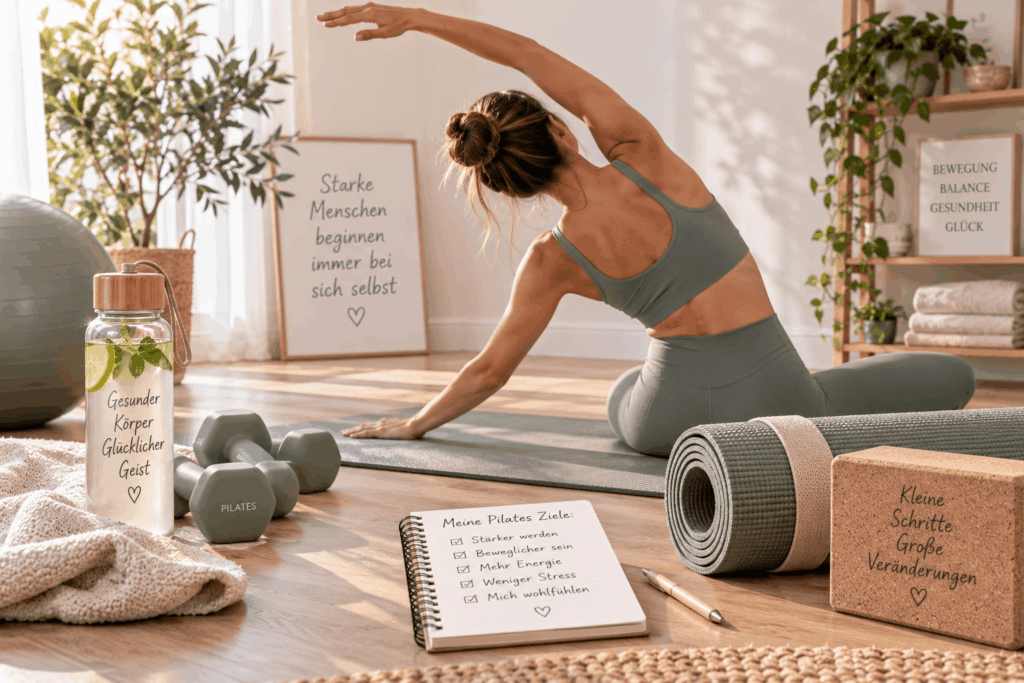
- A good mat:*It should be non-slip and slightly thicker than a traditional yoga mat to provide comfort and stability
- Small accessories: A Pilates ring and resistance bands are ideal for beginners to add variation to the exercises
- Comfortable clothing:* It should be breathable and snug
- Non-slip socks:* These prevent slipping, especially during mat or equipment-based exercises
What are Pilates exercises good for?
Pilates exercises have many benefits:
Physically:
- Strengthening the core muscles: Pilates activates the abdominal, back and pelvic floor muscles, which improves posture and prevents pain.
- Improve flexibility: Pilates stretches and strengthens muscles, increasing mobility.
- Stress relief: Concentrating on breathing calms the mind and promotes well-being.
- Toning of muscles: The exercises define the muscles without making them appear bulky.
Mentally:
- Conscious breathing reduces stress and increases mindfulness. Pilates is therefore not just a workout, but also a method to leave everyday life behind and focus on yourself.
Why is Pilates sometimes so expensive?
The cost of Pilates classes is often higher than other fitness classes because groups are kept small to ensure individual attention. In addition, the training courses for certified trainers are very demanding and comprehensive, which ensures the quality of the courses. Equipment-based Pilates, such as reformer training, is particularly expensive because the special equipment represents an investment.
For a cheaper alternative, I recommend this one Pilates set* which one you want to start with Use at home* can!
Why was Pilates originally invented?
Joseph Pilates originally developed his method to support the rehabilitation of injuries and strengthen health. During World War I, he used his technique to help injured soldiers regain strength and mobility. Pilates later became popular, particularly in the dance and ballet scene, before becoming a fitness phenomenon worldwide.
Conclusion: Pilates – a holistic training for everyone
Pilates is a versatile method that promotes both physical fitness and mental clarity. No matter whether you want to improve your posture, get rid of back pain or simply relax – Pilates offers the right program for everyone. With regular practice, you will not only strengthen your body, but also noticeably improve your well-being. Try it out and discover for yourself why Pilates inspires so many people!
*I use affiliate links on this site through which I receive a small compensation if you purchase something. Changes for you nothing on the price, but you help me continue to provide helpful content!