Self-care is not a luxury, it is your foundation
In times of high demands – be it at work, in relationships, in everyday life – we easily lose our balance. But what is often missing is no longer discipline, but rather genuine care for ourselves. Self-care is the key to staying healthy, productive and fulfilled in the long term. In this post I explain, why self-care is so importantwhat it can look like in concrete terms and give you practical exercises, examples and reflection questionsto get started straight away.
What exactly is self-care?
Self-care includes all conscious actions that promote your physical, emotional and mental well-being. It ranges from sleep, nutrition and exercise to emotional balance through journaling, meditation and healthy boundaries.
Categories of self-care:
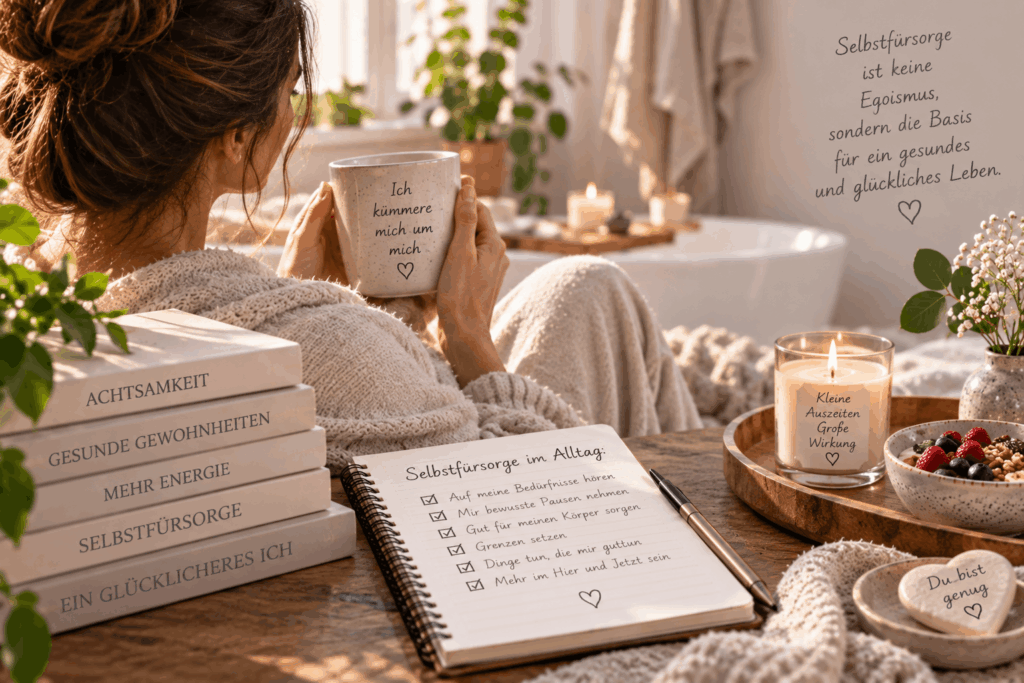
• Physically: healthy eating, exercise, sleep, relaxation
• Emotionally: Maintain relationships, maintain joy in life, understand yourself
• Mentally: Take breaks, practice mindfulness, observe thoughts
• Social: Seek support, connect with people, say “no.”
In fact, self-care is often not lazy; completely rationally blocked:
• Guilty conscience: “If I take care of myself, I’m missing out.”
• Social influence: Many people have it drilled into their heads that self-care is selfish.
• Time pressure: Hardly any space in your head and calendar – but self-care is exactly what creates energy.
How self-care really strengthens you
When you consciously pay attention to yourself, your life wins:
• Less burnout, more balance
• More resilience at work and in everyday life
• Greater emotional stability
• Better relationships – because messing around with helpers is no help
In short: Only those who are balanced themselves can be there for others in the long term.
4. Self-care in concrete terms – examples of what it can look like
| Area | Example action | Effect |
| Physically | 20 minute walk daily | Physical movement + clarity for the head |
| Emotionally | 5 minute gratitude journal in the evening | Positive mood & openness |
| Mentally | 2 minutes of conscious breathing | Immediate reduction of stress |
| Social | Consciously say “no” when it’s too much | protects your resources and increases focus |

How do you learn self-care?
Self-care is a process that takes time and practice. It's about recognizing your own needs and taking them seriously. You learn self-care by consciously taking time for yourself and paying attention to how your body and mind react to stress or overload.
Learning approaches:
- Regularly reflect on how you are feeling and ask yourself: What do I need right now?
- Learn to say “no” and set clear boundaries.
- Be patient with yourself: Self-care is a lifelong learning process.
What does self-care mean to me?
Self-care is individual for each person and can look different. What self-care means to you depends on your personal needs and circumstances. Maybe for you it means exercising regularly, or giving yourself conscious time out to relax.
Ask yourself:
- What is good for me and what do I need to feel good?
- Which activities give me energy and which ones drain me?
- How can I integrate more of what is good for me into my everyday life?
Why is self-care so important, especially for those who help?
People who in helping professions* Those who work – such as nurses, doctors or social workers – tend to neglect their own needs. Self-care is essential, especially in these professions, in order to cope with emotional and physical stress and stay healthy in the long term. Anyone who helps others must also learn to help themselves.
Particularly important for helpers:
- Regular emotional relief, e.g. B. through discussions with colleagues or professional supervision.
- Clearly defined working hours and taking breaks.
- Balance through hobbies and social activities outside of work.
Practical exercises for your day:
1. Morning ritual: Start the day with three conscious breaths – this moment alone can create clarity.
2. Mini break: Schedule 3 minutes away from your screen three times – you'll be amazed at how calmer you stay.
3. Evening ritual: End the day with 2 positive events – 1 minute is enough.
4. Weekly Review: Reflect briefly every Sunday: What was good for me? What was stressing me out?
What can self-care be?
Self-care can take many different forms and can occur on both a physical and emotional level. Here are some ideas:
- Physically: Healthy diet, enough exercise, enough sleep.
- Emotionally: Surround yourself with supportive people, let go of emotional baggage.
- Mentally: Meditation, reading, learning new things, expressing yourself creatively.
Frequently asked questions about self-care (FAQ)
1. How do I find out what is good for me personally?
Write a short list: activities that give you energy and those that you would be better off avoiding.
2. Are self-care and selfishness the same thing?
Clearly: no. Self-care prevents your tank from running out – and you end up giving less to yourself and others.
3. Do I have to invest a lot in it every day?
No. Short but consistent is enough. 5 minutes of meditation or mindfulness can have a noticeable effect.
4. How do I recognize that I am becoming more self-caring?
When you are less irritable, have more energy, clearer thoughts and make better decisions.
5. How do I bring self-care into my life long-term?
Make them a priority – like brushing your teeth or eating. Set recurring rituals or reminders (e.g. cell phone reminder) in the calendar.
Bonus tips for even more impact
• Use self-care as a ritual, not a program: Routine beats motivation.
• Watch yourself: How do you react physically/emotionally to the day? Pay attention to little cues from your body.
• Swap mini routines: Replace breakfast with mindfulness – give a little new, good impulse every day.
Conclusion
Self-care is not a luxury, but a necessity for a healthy, balanced life. It is the key to sustainable well-being and helps us to face the challenges of everyday life with more calm. Whether physical exercise, mental relaxation or emotional support – self-care has many facets that you can adapt to your individual needs.
Your first step? Find out what's really good for you – and start today with small steps!*
*I use affiliate links on this site through which I receive a small compensation if you purchase something. Changes for you nothing on the price, but you help me continue to provide helpful content!