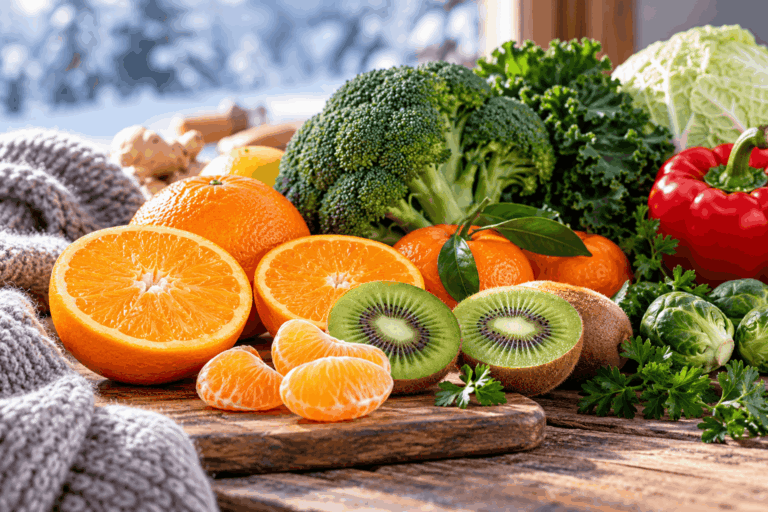
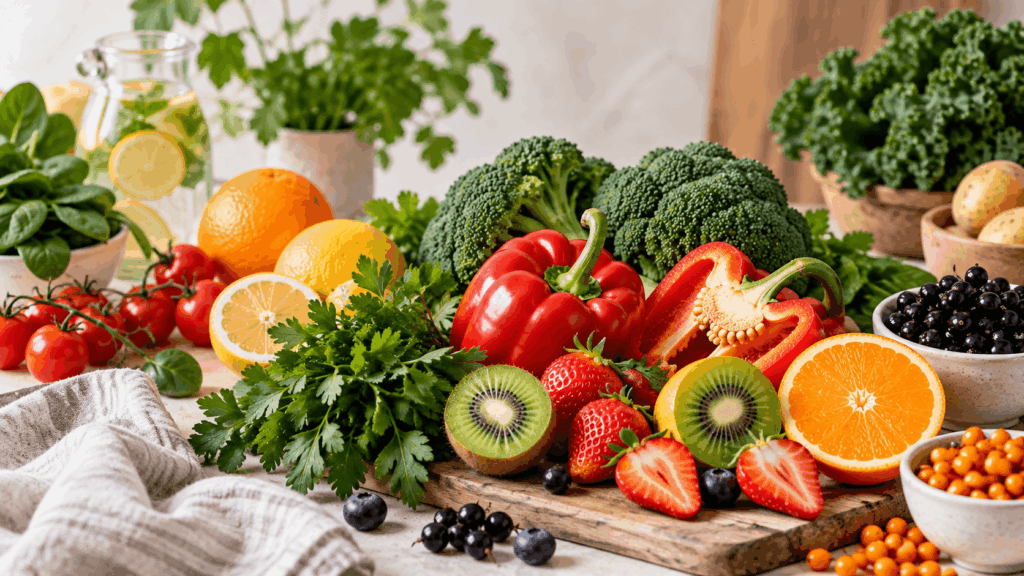
Vitamin C is one of the most well-known vitamins of all. Especially in the cold season, many people think about how they can make their diet richer in vitamins and supply their body with important nutrients. It doesn't have to be complicated: Many normal foods contain vitamin C and can easily be integrated into your daily menu.
From peppers and broccoli to kiwi and berries to cabbage and potatoes, there are a surprising number of ways to eat vitamin C-rich foods.
In this article you will find 20 foods rich in vitamin Cthat you should know, why vitamin C is important and how you can easily integrate more of it into your everyday life.
Why is vitamin C important?
Vitamin C, also called ascorbic acid, fulfills various important functions in the body. Among other things, it contributes to the normal function of the immune system, to the protection of cells from oxidative stress and to normal collagen formation. Vitamin C also supports normal energy metabolism and helps reduce tiredness and fatigue.
This is precisely why it is worth regularly incorporating foods with vitamin C into your diet.
The following applies: A balanced diet is fundamentally the best basis for nutrient supply. So you don't automatically have to resort to nutritional supplements just because you want to increase your vitamin C intake.
20 foods rich in vitamin C
1. Red peppers
Red pepper is one of the particularly good sources of vitamin C. It tastes wonderfully crunchy raw, but is also suitable for salads, bowls, vegetable stir-fries or as baked vegetables.
Tip: Cut peppers into small pieces in the morning and store them in the refrigerator. This way you quickly have a vitamin-rich snack at hand.
2. Blackcurrants
Blackcurrants are small berries with a remarkably high vitamin C content. They taste intense and slightly sour and go perfectly with yogurt, Skyr, oatmeal or homemade smoothies.
3. Sea buckthorn
Sea buckthorn is also known for its high vitamin C content. However, the orange berries are very sour and are therefore often processed, for example into juice or puree.
4. Parsley
Parsley is often just seen as a decoration on the plate – but the green herb can definitely contribute to the supply of vitamin C.
Fresh parsley goes well with potatoes, soups, salads, dips and many warm dishes.
Simple trick: Finally, add a handful of freshly chopped parsley over your food.
5. Broccoli
Broccoli is versatile, filling and a practical addition to a balanced diet. It goes well with rice, potatoes, pasta, bowls or as a side dish with fish and other protein sources.
Since vitamin C can be sensitive to heat and water, it is recommended that it be prepared as gently as possible.
6. Brussels sprouts
Brussels sprouts are particularly interesting in autumn and winter. The small green florets can be roasted in the oven, steamed or prepared as part of vegetable stir-fries.
If you've found Brussels sprouts boring, you should try them in the oven with a little olive oil and spices.
7. Kale
Kale is one of the typical winter vegetables and can be prepared in many ways. In addition to classic dishes, it can also be used in soups, salads or green smoothies.
8. Cauliflower
Cauliflower can also contribute to a varied diet rich in vitamin C. Particularly practical: it is incredibly versatile.
For example, you can use it as a side dish, soup, baked vegetables or as part of a vegetable stir-fry.
9. Kiwi
Kiwi is an easy way to get more vitamin C into your everyday life. The fruit is ideal for breakfast and snacks.
Kiwi tastes particularly delicious together with natural yoghurt, skyr and oat flakes.
10. Strawberries
Strawberries are not only popular in summer. Frozen berries can also be practical and can be used in smoothies or bowls, for example.
11. Orange
Oranges are probably one of the most well-known sources of vitamin C. They are suitable as a snack, for breakfast or as part of fruit salads.
A whole orange also provides fiber, which is contained in a significantly smaller amount when drinking pure juice.
12. Tangerines
Tangerines are particularly practical because they are easy to peel and eat on the go. Especially as a small snack between two meals, they are an easy way to incorporate fruit into your everyday life.
13. Lemon
Lemons are not typically eaten in large quantities, but can be used as a small supplement.
A splash of lemon juice goes well with salad dressings, vegetables, fish or water, for example.
14. Grapefruit
Grapefruit has a characteristic slightly bitter taste and also contains vitamin C.
Important: Grapefruit can interact with certain medications. Anyone who regularly takes medication should therefore ask their doctor or pharmacy beforehand.
15. Potatoes
Potatoes are often not immediately associated with vitamin C. But they can also contribute to the supply of vitamin C and at the same time are a versatile basis for numerous dishes.
Whether baked potatoes, potato salad, jacket potatoes or potato soup – the possibilities are huge.
16. Tomatoes
Tomatoes are a real everyday food and are particularly easy to integrate. Whether in a salad, on bread, in a vegetable pan or as part of a tomato sauce – they can be used in a variety of ways.
17. Spinach
Spinach can be used fresh or frozen and is suitable for many quick dishes.
A spinach pan with egg, spinach in a smoothie or a creamy spinach soup are just a few options.
18. Kohlrabi
Kohlrabi is particularly delicious raw. Simply peel, cut into sticks and serve with a yogurt dip.
This makes it ideal as a snack for work, university or on the go.
19. White cabbage
White cabbage is cheap, has a long shelf life and is versatile. For example, it can be used as a salad, vegetable side dish or part of hearty dishes.
Depending on the product and preparation, sauerkraut can also be an interesting addition.
20. Rose hips
Rose hips are also fruits rich in vitamin C. Because of their intense taste, they are often processed, for example into tea, puree or other products.
Tip: If you like to use berries, kiwi or other fruit in smoothies, you can use one powerful mixer make preparation much easier.
How much vitamin C does the body need?
The vitamin C requirement depends, among other things, on age and gender. The German Nutrition Society gives different reference values for adults. For example, for adult women the estimated value is 95 mg per day and for adult men it is 110 mg per day.
Smokers have higher needs.
Nobody has to laboriously count milligrams every day. If you regularly eat a variety of fruits and vegetables, you create a good basis for your vitamin C supply.
Vitamin C: raw or cooked?
An important point is often forgotten: Vitamin C is sensitive.
Longer storage, oxygen, light and especially strong or long heating can lead to some of the vitamin being lost.
However, this does not mean that vegetables always have to be eaten raw.
Gentle methods of preparation such as short steaming can be a good option. The cooking water should not be thrown away unnecessarily if it contains water-soluble vitamins.
This way you can integrate more vitamin C into your everyday life
You don't need a complicated nutrition plan. Small changes are often enough.
For breakfast:
Add kiwi, strawberries or blackcurrants to yogurt, Skyr or oatmeal.
As a snack:
Prepare an orange, tangerines, peppers or kohlrabi.
For lunch:
Use broccoli, peppers or tomatoes as a vegetable side dish.
For dinner:
Prepare a salad with peppers, tomatoes and fresh parsley.
For on the go:
Take fruit and cut vegetables with you in a reusable box.
Vitamin C and iron – an interesting combination
Vitamin C is not only interesting because of its own functions. It can also improve the absorption of iron from plant foods.
It can therefore make sense to combine plant sources of iron with foods rich in vitamin C.
An example would be a lentil salad with peppers and lemon juice or an oatmeal breakfast with berries and kiwi.
Do you need vitamin C supplements?
Not automatically.
Many people can easily absorb vitamin C through a varied diet. Dietary supplements are therefore not generally necessary.
Furthermore, more is not automatically better. For example, very high amounts of vitamin C can lead to gastrointestinal problems.
If you are unsure whether nutritional supplements make sense, you should discuss this individually with a doctor or a qualified nutritionist.
If you still want to try vitamin C supplements, take a look here. I have put together a list for you that I have used:
Frequently asked questions about foods rich in vitamin C
Which food contains the most vitamin C?
Some foods such as sea buckthorn, black currants, rose hips or certain vegetables can contain a particularly high amount of vitamin C. However, the exact content depends, among other things, on the variety, maturity, storage and preparation.
Are peppers rich in vitamin C?
Yes. Red pepper in particular is one of the very good sources of vitamin C and can be easily integrated into many dishes.
Are oranges the best source of vitamin C?
Oranges contain vitamin C, but are by no means the only or automatically best source. Peppers, berries, cabbage, kiwi and various other fruits and vegetables can also provide relevant amounts.
Can vitamin C protect against a cold?
Vitamin C is important for normal immune system function. Adequate supply therefore makes sense. However, it cannot be concluded from this that particularly large amounts reliably prevent a cold.
Conclusion: Vitamin C can be easily integrated into everyday life
A diet rich in vitamin C does not have to be complicated or expensive. Peppers, broccoli, cabbage, potatoes, tomatoes, kiwi, berries and citrus fruits offer numerous options for varied eating.
The most important point is not to eat a certain “superfood” every day. One makes much more sense colorful and varied selection of fruits and vegetables.
For example, if you eat a kiwi in the morning, add peppers or broccoli for lunch and prepare a salad with tomatoes and fresh parsley in the evening, you can easily combine different sources of vitamin C.
Healthy eating doesn't have to be complicated – it often just starts with a little more color on your plate.