
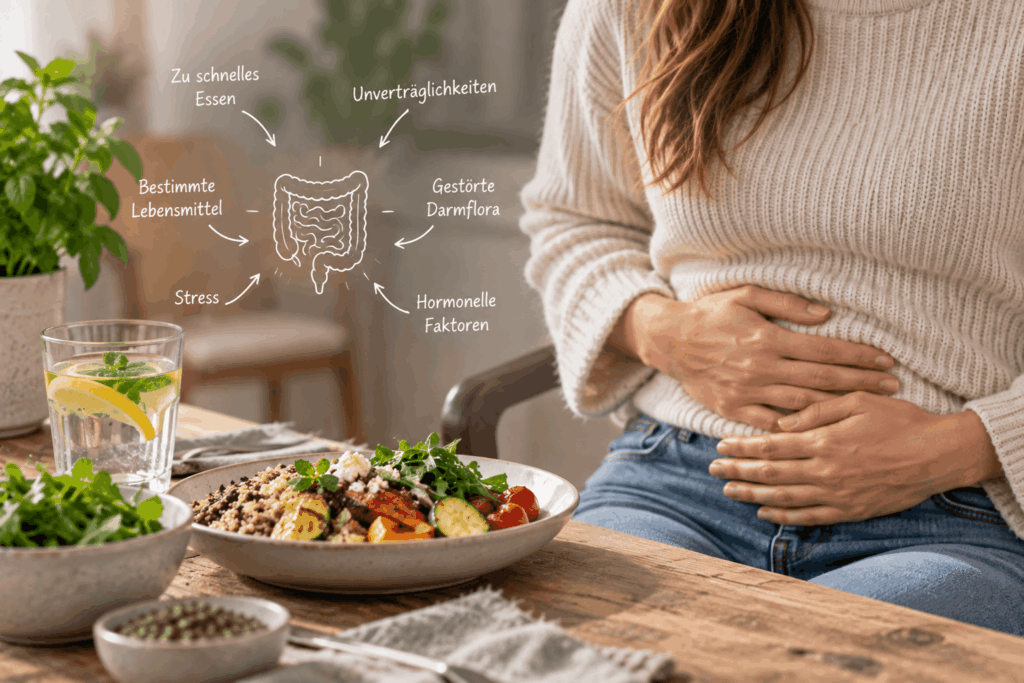
A bloated stomach after eating is one of the most common digestive problems. Many people suddenly feel uncomfortably full after a meal, their stomach becomes tense or appears visibly larger. Sometimes there is also pressure, a feeling of fullness or increased intestinal gas.
Occasionally this is completely normal. However, if a bloated stomach occurs regularly, there is often more to it than just “eating too much”.
In this article you will find out what causes a bloated stomach after eating, which foods are particularly often responsible and what you can do to relieve your digestion.
What exactly is a bloated stomach?
A bloated stomach occurs when an excessive amount of gas accumulates in the digestive system. These gases are mainly produced in the intestines during digestion.
Billions of intestinal bacteria live in the large intestine in particular and ferment undigested food components. This produces gases such as:
- hydrogen
- methane
- Carbon dioxide
A certain amount of this is completely normal. However, if too many gases are produced or the intestines cannot transport them well, a bloated stomach results.
Typical symptoms are:
- visible bloating of the abdomen
- Pressure or feeling of tension
- Feeling of fullness after eating
- increased belching or flatulence
- sometimes stomach pain
Many sufferers report that their stomach is still relatively flat in the morning and swells more and more as the day goes on.
Common causes of a bloated stomach after eating
A bloated stomach often has several causes at the same time. Nutrition, digestion and intestinal flora play an important role.
Let's take a closer look at the most common triggers.
1. Eating too fast
One of the underestimated causes of bloating is simply the speed of eating.
If you eat hastily, you automatically swallow more air. This air enters the digestive tract and can later lead to a bloated stomach.
In addition, the stomach has less time to send satiety signals to the brain. As a result, people often eat more than actually necessary.
Typical indications of this cause are:
- you usually eat very quickly
- you chew little
- you often have pressure in your upper abdomen after eating
Even small changes can make a big difference here.
Tips:
- Chew every bite consciously
- Eat meals without distraction
- Put down the cutlery in between
2. Foods that are difficult to digest
Certain foods are known to cause increased gas formation in the intestines.
These particularly include:
- legumes
- Cabbage
- Onions
- Garlic
- certain whole grain products
These foods contain complex carbohydrates that are not fully digested in the small intestine. They therefore end up in the large intestine, where intestinal bacteria ferment them.
This creates larger amounts of gases.
Important: These foods are fundamentally healthy. A bloated stomach doesn't automatically mean you have to avoid them completely. It often helps to slowly increase the amount so that the intestines can get used to it.
3. A sensitive intestinal flora
The composition of the intestinal flora has a major influence on how well food is tolerated.
In a healthy intestine, many different types of bacteria live in balance. If this balance is out of balance, certain bacteria can take over.
The consequences can be:
- stronger gas formation
- sensitive intestines
- Flatulence after certain foods
An unbalanced intestinal flora can arise, for example, from:
- very unbalanced diet
- frequent antibiotics
- stress
- too little fiber
A varied diet with lots of plant-based foods can help support the diversity of intestinal bacteria.
4. Sugar alcohols and artificial sweeteners
Many people today turn to “sugar-free” products. But these are exactly the things that can cause flatulence.
Especially sugar alcohols like:
- sorbitol
- Xylitol
- Mannitol
are only partially absorbed in the small intestine.
The rest ends up in the large intestine, where it is fermented by intestinal bacteria. This in turn creates gases.
This is why many people report bloating after consuming:
- sugar-free chewing gum
- Light products
- protein bars
- Diet products
Here it may make sense to take a closer look at the list of ingredients.
5. Lactose intolerance
A very common trigger for bloating after eating is lactose intolerance.
The body lacks enough of the enzyme Lactase, which breaks down milk sugar (lactose).
Undigested lactose enters the large intestine, where it is broken down by bacteria. This produces large amounts of gas.
Typical symptoms usually appear within 30 minutes to 2 hours after eating:
- Bloated stomach
- abdominal cramps
- Diarrhea
- strong intestinal noises
Those who are particularly affected are:
- Milk
- cream
- Ice
- soft cheeses
However, many people tolerate small amounts or fermented products such as yogurt much better.
6. Fructose malabsorption
Fructose can also cause digestive problems in some people.
In fructose malabsorption, fructose is not fully absorbed in the small intestine. The excess sugar reaches the large intestine and is fermented there by intestinal bacteria.
This in turn creates gases.
Foods high in fructose include:
- Apples
- Pears
- Honey
- fruit juices
- Dried fruits
Many sufferers can tolerate small amounts of fructose without any problems, but are sensitive to larger portions.
7. Irritable bowel syndrome
If bloated stomach occurs very frequently and abdominal pain, diarrhea or constipation also occur, irritable bowel syndrome may also be behind it.
The intestines are particularly sensitive to:
- certain foods
- stress
- hormonal changes
It is typical for symptoms to get worse after eating.
Intestinal movement can also be changed in irritable bowel syndrome, which means that gases are more difficult to remove.
8. Stress and digestion
Many people underestimate how much stress affects digestion.
The intestines are closely connected to the nervous system. People even often talk about it “second brain” of the body.
When stressed, the body switches into alarm mode. Digestive processes are given less priority.
This can lead to:
- Food is digested more slowly
- more gases form
- the intestines react more sensitively
Hectic meals during everyday work are therefore a frequent trigger for digestive problems.
9. Too little exercise
Exercise supports natural intestinal movement.
Those who hardly move after eating are more likely to develop a bloated stomach because gases remain in the intestines for longer.
Even a short walk after eating can help stimulate digestion.
When a bloated stomach should be medically clarified
In most cases, bloated stomach is harmless and is related to diet or lifestyle.
However, there are situations in which a medical evaluation makes sense.
For example, if additionally occur:
- severe or persistent abdominal pain
- unexplained weight loss
- Blood in the stool
- persistent diarrhea
- severe changes in digestion
These symptoms may indicate other illnesses and should definitely be examined.
What you can do about a bloated stomach after eating
Fortunately, many bloated stomach problems can be improved with simple measures.
1. Eat more slowly
Consciously take time for your meals.
Well-chewed food is processed more easily in the stomach and produces fewer gases in the intestines.
2. Observe food consciously
Not everyone reacts to the same foods.
A food diary can help identify triggers.
3. Increase fiber slowly
Fiber is important for intestinal health. However, if they are increased too quickly, the intestines can react with increased gas formation.
So increase it slowly.
4. Incorporate gut-friendly foods
Certain foods support healthy intestinal flora particularly well.
These include, for example:
- oatmeal
- fermented foods
- Vegetables
- Berries
- Nuts
5. Exercise after eating
A short walk of 10-15 minutes can significantly aid digestion.
Conclusion: A bloated stomach after eating often has several causes
A bloated stomach after eating is unpleasant, but usually harmless. Nutrition, eating habits and intestinal flora often play an important role.
Eating too quickly, foods that are difficult to digest or intolerances can lead to more gas being produced in the intestines.
The good news: Even small changes in everyday life can often bring noticeable improvements.
If you eat consciously, pay attention to your digestion and support your intestinal flora, you can significantly reduce bloating in the long term.