
Maybe you know this: You want to do something for your intestinal health, but you don't know where to start.
On the Internet you will find countless tips on colon cleansing, detox, probiotics, dietary supplements and so-called intestinal reset programs. At the same time, there seems to be a different recommendation for every food.
It doesn't have to be that complicated.
A varied diet, sufficient fiber, enough fluids, exercise and an overall balanced lifestyle form a good basis for your intestinal health.
And this is exactly where this one comes in 30 day plan to.
You don't have to change your entire diet in one day. Instead, you can build new habits step by step over four weeks.
Important: This article does not replace medical advice. The 30 days are not a healing program or a medical “intestinal cleanse”. They are intended to give you practical ideas on how you can make your diet and your everyday life more conscious.
What does intestinal health actually mean?
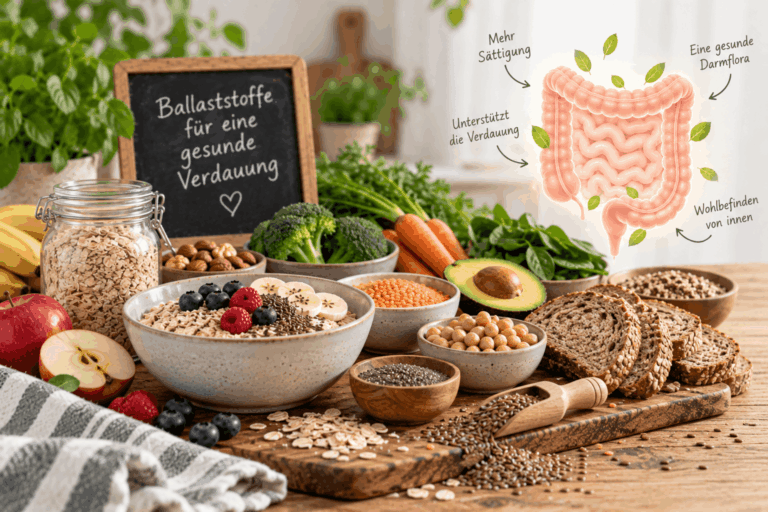
Our digestive tract performs numerous tasks. At the same time, in the intestine there is the so-called Microbiome – a community of many different microorganisms.
The composition of the microbiome differs from person to person and can be influenced by, among other things, diet and lifestyle.
That's why there is no one perfect diet that works equally for everyone.
What, on the other hand, can be implemented relatively easily: bring more variety to the plate.
These include, for example:
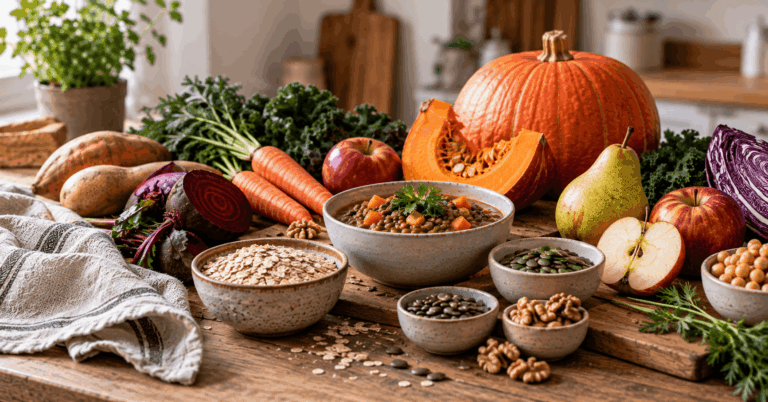
- vegetables and fruits
- Whole grain products
- legumes
- Nuts and seeds
- sufficient fluid
- as varied a variety of foods as possible
The goal should therefore not be to “clean” the intestines as quickly as possible.
It makes much more sense to build habits that you can maintain after the 30 days.
Gut health in 30 days: your 4-week plan
You can use the next 30 days to make your diet and your everyday life more conscious step by step.
The following applies: You don't have to do everything perfectly.
It's not about checking off all the points every day. What's more important is finding out what changes feel good and realistic for you.
Want an even more structured 30-day plan?
If you don't want to think for yourself every day, what you could eat, buy or change, a finished plan can be a practical support.
The eBook “Intestinal health in 30 days” by Marilia Grossmann is structured as a structured 30-day plan and contains, among other things, daily impulses, recipes, weekly plans, shopping lists and meal prep tips. According to the product description, topics such as fiber, pre- and probiotics, stress, sleep and exercise are also covered.

*Advertising/affiliate notice: This post contains affiliate links. If you purchase a product through such a link, I may receive a commission. This does not incur any additional costs for you.
Advertising/Affiliate Notice: This post contains affiliate links. If you purchase a product through such a link, I may receive a commission. This does not incur any additional costs for you.
10 foods that you can incorporate into your diet more often
There is no single food that “makes your gut healthy.”
The combination of different foods is much more important.
These ten foods are nevertheless practical components of a varied diet:
1. Oatmeal
Oat flakes provide fiber and are ideal for porridge, overnight oats or homemade muesli.
2. Berries
Berries add variety to your breakfast and provide fiber and various plant substances.
3. Apples
Apples are uncomplicated, versatile and ideal as a snack.
4. Flaxseed
Flax seeds can be easily integrated into porridge, yoghurt or smoothies.
5. Broccoli
Broccoli provides fiber and various micronutrients.
6. Lenses
Lentils are versatile and are suitable for soups, salads, curries or bowls.
7. Chickpeas
You can use chickpeas for hummus, salads or warm dishes, for example.
8. Nuts
Nuts are a practical addition to breakfast and snacks.
9. Natural yogurt
For example, natural yogurt can be combined with berries, oatmeal and nuts.
10. Whole grains
Whole-grain bread, brown rice, or whole-grain pasta can be an easy way to get more fiber.
Example of a gut-friendly daily plan
You don't need complicated recipes to add variety to your diet.
Breakfast
Overnight oats with oat flakes, natural yogurt, berries and flax seeds
Lunch
Quinoa or whole grain rice bowl with vegetables and chickpeas
snack
Apple with a small portion of nuts
Dinner
Vegetable soup with whole grain bread
Drinks
Water and unsweetened tea throughout the day.
What you don't need for your intestinal health
When it comes to gut health, you probably come across a lot of promises.
One thing is therefore particularly important:
More is not automatically better.
You don't necessarily need:
❌ a radical detox cure
❌ fasting for days
❌ extreme exclusion diets
❌ countless nutritional supplements
❌ expensive “intestinal cleanses”
❌ constantly new intestinal products
A varied diet and long-term habits are much more useful than constantly trying out new short-term programs.
When should you seek medical attention for digestive problems?
Not every digestive complaint can be solved by changing your diet.
If symptoms occur new, are very severe or persist for a long time, you should have them checked out by a doctor.
This is particularly important, for example:
- Blood in the stool
- unexplained weight loss
- severe or persistent abdominal pain
- prolonged diarrhea
- prolonged constipation
- unusual or severe tiredness
- Complaints that get progressively worse
This article and any 30-day meal plan do not replace medical examination or treatment.
Conclusion: intestinal health begins in everyday life
You don’t have to achieve a “perfect gut” in 30 days.
Another idea makes much more sense:
30 days can be the start of new habits.
More plant diversity.
More fiber.
Drink regularly.
Integrate exercise into everyday life.
Eat more consciously.
Get enough sleep.
And most importantly, find out what habits fit your own everyday life.
If you don't want to plan everything yourself, a structured guide can be a practical support.
The eBook “Intestinal health in 30 days” you can find it here:
👉 Gut Health in 30 Days – View eBook
Advertising/Affiliate Notice: This post contains affiliate links. If you purchase through such a link, I may receive a commission. This does not incur any additional costs for you.
Frequently asked questions about “Intestinal health in 30 days”
Can you make your intestines healthy in 30 days?
A blanket statement like “Your intestines will be healthy after 30 days” would not be serious.
However, 30 days can be a useful period of time to build new habits and become more conscious of your own diet.
How can I improve my gut health?
A varied diet with vegetables, fruits, whole grain products, legumes, nuts and seeds can form a good basis. In addition, there is sufficient fluid, exercise, sleep and an overall balanced lifestyle.
How much fiber should you eat daily?
For adults, the German Nutrition Society recommends a daily fiber intake of at least 30 grams.
If you have been eating significantly less fiber, you should gradually increase the amount.
Are legumes good for the intestines?
Legumes provide a lot of fiber and can therefore be part of a varied diet.
If you haven't eaten them much before, you can start with small amounts and see how you tolerate them.
Do I have to avoid sugar completely?
No.
A balanced diet does not mean that individual foods are fundamentally forbidden.
The overall nutritional pattern is much more important.
Do I need an intestinal cleanse?
A radical intestinal cleansing is not necessary in order to eat a fundamentally intestinal-friendly diet.
Instead of short-term extremes, long-term habits can make more sense.
Who can use a 30-day eBook?
A structured plan can be particularly practical if you want to make fundamental changes to your diet and everyday life, but don't want to put together recipes, shopping lists and next steps yourself every day.