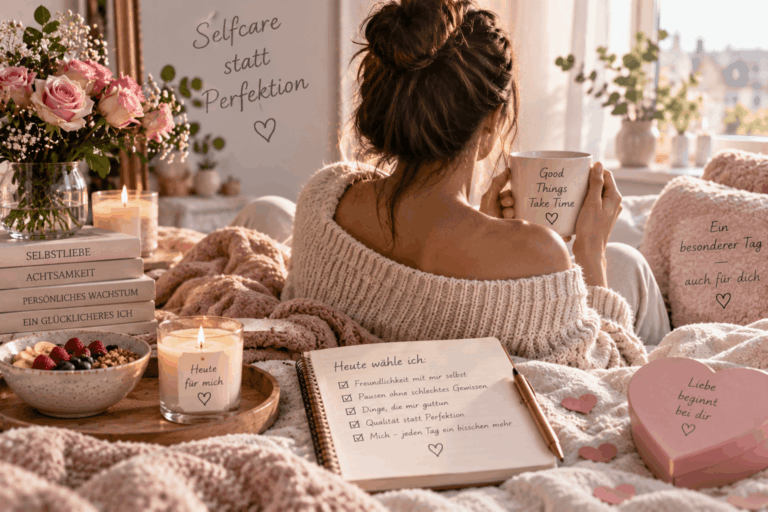


Why spirituality is important, especially today
We live in a hectic world in which many people long for peace, meaning and inner fulfillment. While material things only bring short-term happiness, more and more people are looking for a deeper connection – to themselves, to others and perhaps to something bigger. This is exactly where spirituality comes into play. But what does spirituality really mean? And how can you integrate them into your life?
The origins of spirituality
Spirituality is as old as humanity itself. Even in ancient cultures such as Egypt, India and among indigenous peoples, the search for meaning, connection and transcendence was central.
• India: Yoga philosophy (e.g. Patanjali) laid the foundations for mindfulness, meditation and self-reflection.
• Greece: Philosophers like Socrates and Plato asked questions about the soul and the “good life”.
• Indigenous peoples: Shamanic rituals connected people with nature and the cosmos.
👉 Spirituality does not have a uniform definition, but is reflected in many traditions and paths.
Who am I in spirituality?
Probably the most important question is: “Who am I really?”
• Am I just my body?
• Am I my thoughts or roles in everyday life?
• Or is there a deeper essence that exists independent of external circumstances?
Many spiritual traditions see the answer in one inner essence or soul, which is immutable. Meditation and self-reflection help to discover this level.
👉 Exercise: Sit for 5 minutes, close your eyes and repeat the question “Who am I?” – without looking for a quick answer. This often opens up a new awareness.
Experiencing spirituality instead of just understanding it
Knowledge alone doesn't make you spiritual – you have to have experiences.
• Meditation: Sit quietly for 10-20 minutes regularly and observe thoughts.
• Breathing techniques: E.g. breathe in for 4 seconds – breathe out for 6 seconds → promotes inner peace.
• Mindfulness: Eat, walk and listen consciously in everyday life.
• Rituals: Lighting a candle, keeping a gratitude journal, nature walks.
👉 Important: It's not about being perfect, but about experiencing it again and again.
How do you explain spirituality?
Spirituality can be described as the search for a deeper meaning in life. It often refers to the feeling of being connected to yourself, nature and the universe. For some this happens through religious practices, for others through meditation, yoga or consciously experiencing the moment.
What spirituality is not
• Not a “quick-happy-maker”.
• No escape from reality.
• Not automatically religious (although religion has spiritual elements).
Spirituality is an individual path, not a competition. Every person has their own speed and shape.
Forms of spirituality in everyday life
• Nature spirituality: Connection through walks, gardening, animals.
• Artistic spirituality: Painting, dancing, music as an expression of inner depth.
• Body-oriented spirituality: Yoga, Tai Chi, Qi Gong.
• Contemplative Spirituality: Silent meditation, prayer, journaling.
👉 You don't have to do all the shapes – choose what appeals to you.

Spiritual Dangers and Pitfalls
Spirituality can also be misused. Examples:
• Spiritual Ego: “I’m further along than you.”
• Sects or extreme groups: Manipulation under the guise of spirituality.
• Escape: Problems are not solved, but suppressed.
👉 Tip: Stay critical, trust your gut feeling and check whether a path really strengthens you.
Spiritual exercises for everyday life
1. 3 deep breaths in the morning → start the day consciously.
2. Gratitude journal → Write down 3 things every evening that you are grateful for.
3. Conscious walking → 10 minutes outside, without a cell phone, take it step by step.
4. Meditation routine → fixed time, e.g. B. 10 minutes before bedtime.
5. Affirmations → “I am enough”, “I trust life”.
Spirituality and science – an exciting dialogue
Spirituality used to be just faith, but today science shows: meditation has been proven to change the brain, mindfulness reduces stress, and gratitude increases well-being.
👉 Neuroscience studies show that spiritual practices have real physical and psychological effects.
The path to yourself – very practical
• Start small: 5 minutes of silence is better than nothing.
• Be consistent: It's better to do a short session every day than for hours once a month.
• Forgive yourself for regressions: Spirituality is a path, not a destination.
• Seek exchange: inspire books, groups or conversations with like-minded people.
-> For this purpose I created a journal where you can write down your thoughts and feelings every day. Feel free to try it*
Frequently asked questions about spirituality (FAQ)
1. Do I have to be religious to live spiritually?
No. Religion can be a way to experience spirituality, but it is not necessary. Many people define spirituality independently of religious institutions – for example through meditation, closeness to nature or creative activities.
2. How much time do I need for spiritual practice?
Just a few minutes a day are enough. It's not about quantity, but about quality. Even 5 minutes of conscious breathing can ground you internally.
3. Can spirituality help reduce stress?
Yes, numerous studies show that meditation, mindfulness and prayer reduce stress hormones and strengthen resilience. A spiritual ritual in the morning or evening can calm your nervous system.
4. What mistakes do beginners often make?
Many expect quick results. But spiritual practice is a path, not a sprint. Another mistake: too much input at once (books, courses, apps) without really integrating what you have learned.
5. How do I know if I am becoming more “spiritual”?
You become calmer, more reflective and more aware of yourself and others. The way you deal with challenges often changes – instead of panicking, you find inner stability.
Practical example: My path with meditation
When I first started meditating, I was skeptical. I thought I would have to sit still for hours. But after the first 5 minutes I felt: I was calmer, clearer and could observe my thoughts better. Today it's 15 minutes a day – a little ritual that has changed my everyday life.
👉 This example shows: Spirituality does not begin with big steps, but with small but consistent routines.
Spiritual sources and inspiration
If you want to go deeper, books and teachers who have decades of experience will help. Examples:
• Thich Nhat Hanh – Mindfulness in everyday life
• Eckhart Tolle – The power of the present
• Paramahansa Yogananda – Autobiography of a Yogi
Scientifically proven: The Harvard study on “Mindfulness-Based Stress Reduction (MBSR)” shows that mindfulness training changes brain structures and increases well-being.
Spirituality in the modern world
Many people think they have “no time” for spirituality. But: You can integrate them anywhere.
• Breathe consciously while brushing your teeth.
• Take 3 deep breaths on the subway.
• Express gratitude before bed.
It's not about completely changing your life, but about small islands of mindfulness.
3 exercises for beginners
1. Silent minute in the morning – sit for 60 seconds, close your eyes and feel within yourself.
2. Gratitude in the evening – write down 3 things you are grateful for today.
3. Conscious walking – 10 minutes without a cell phone, feeling the earth step by step.
Conclusion
Spirituality helps many people to cope with everyday life more calmly, to feel connected to themselves and the world and to achieve inner satisfaction. It offers an opportunity to find deeper meaning in life and to deal with challenges better. Spirituality can take many forms and be practiced in many ways. The most important insight, however, is that it is a personal journey that everyone can discover and shape for themselves. Spirituality is not a fixed state, but a path. Whether you meditate, write in a diary, be in nature or read inspiring books – it's always about consciously connecting with yourself. Start small, stay curious and find your own form.
*I use affiliate links on this site through which I receive a small compensation if you purchase something. Changes for you nothing on the price, but you help me continue to provide helpful content!