
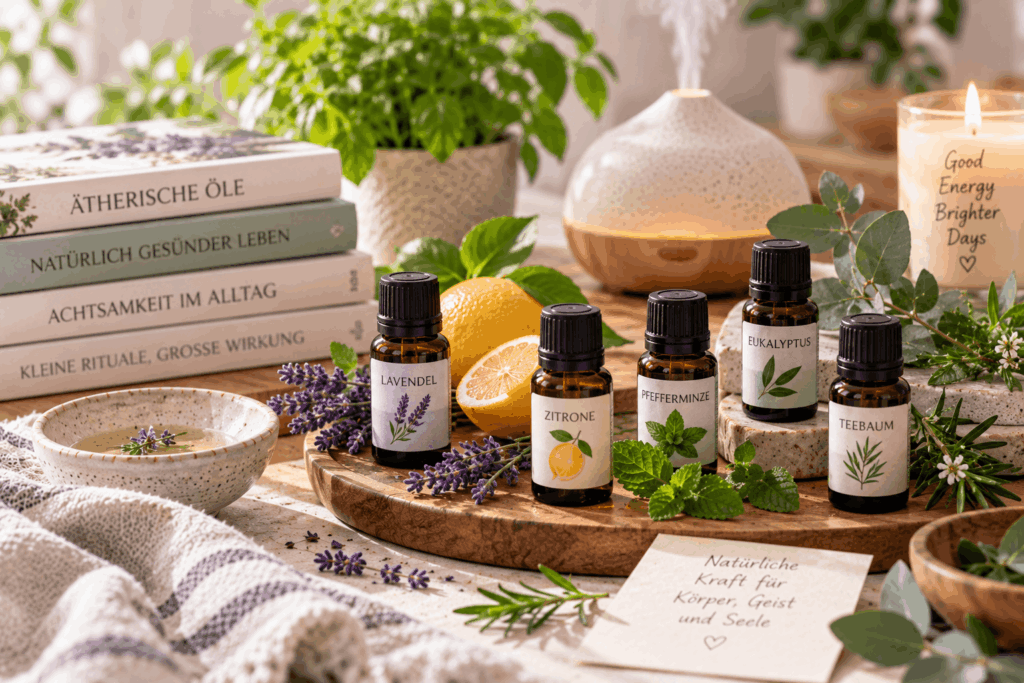
Essential oils have been known for their diverse uses and positive effects for thousands of years. Whether for relaxation, skin care or as a room scent – these highly concentrated plant extracts are becoming increasingly popular. In this blog post you will learn everything about the correct use, production and storage of essential oils as well as their effects on the body and mind.
What are essential oils?
Essential oils are natural, highly concentrated extracts that are obtained from various parts of plants, such as flowers, leaves, peels or roots. They contain the plant's characteristic fragrances and active ingredients in a very concentrated form and are obtained by distillation, cold pressing or extraction. Popular essential oils include lavender, peppermint, tea tree or eucalyptus.
How are essential oils made?
Essential oils are usually produced by steam distillation. Water vapor is passed through the plant material, releasing the essential components and transporting them with the steam. The water and oil are then separated, leaving the pure essential oil. Citrus oils such as orange or lemon oil, on the other hand, are usually obtained by cold pressing the fruit peels.
Application of essential oils
Essential oils can be used in a variety of ways. Here are the most common methods:
1. Dilute and apply to skin
Essential oils are extremely concentrated and should never be applied undiluted to the skin as they can cause irritation or allergies. To use it safely, mix it with a carrier oil such as jojoba oil, almond oil or coconut oil. A common dilution ratio is about 2-3 drops of essential oil to 10 ml of carrier oil. This mixture can then be gently massaged into the skin – the soles of the feet or the temples are particularly popular.
2. Inhalation or diffusion
Inhaling essential oils is another effective way to reap their benefits. Using a diffuser or simply inhaling a few drops on a tissue, the oils can develop their beneficial effects. Particularly lavender* and eucalyptus are popular here for relaxation or respiratory support.
3. Evaporation
Essential oils can be in one Diffuser* or one Fragrance lamp* be evaporated. A few drops of the oil are mixed with water and heated so that the scent is distributed throughout the room. This method is ideal for creating a pleasant atmosphere or improving indoor air quality.
Why dilute essential oils?
The high concentration of essential oils requires dilution to avoid skin irritation and to optimize their effect. Carrier oils such as almond or jojoba oil help to use the essential oils more safely while nourishing the skin.
How do essential oils work in the body?
Essential oils develop their effects in different ways. They can enter the bloodstream through the skin, where they develop their positive properties. They also have a direct effect on the limbic system, which is responsible for emotions and memories, via the sense of smell. Lavender oil, for example, calms and relaxes, while peppermint oil has a refreshing and concentration-enhancing effect.
How long do essential oils stay in the body?
The active ingredients in essential oils are usually absorbed and excreted by the body relatively quickly. The exact retention time depends on the type of oil, application method and individual metabolic rate. They usually break down completely within 24 to 48 hours.

How long do essential oils last?
Depending on the type and storage, essential oils have a shelf life of around 1 to 3 years. Citrus oils tend to oxidize more quickly and should be used within a year, while resinous oils like frankincense have a longer shelf life. Storage in a cool, dark place in tightly closed glass bottles extends the shelf life.
How do you store essential oils correctly?
To maintain the quality and effectiveness of essential oils, they should be stored in a cool, dark place, ideally in an amber glass bottle. Direct sunlight or large temperature fluctuations can change the chemical composition and shorten the shelf life.
Where can you buy essential oils?
Essential oils are available in pharmacies, health food stores, organic stores or available online*. When purchasing, you should make sure that the oils are 100% natural and free of synthetic additives. Well-known brands such as DoTerra offer high-quality, therapeutic oils that are subject to strict quality controls.
What do essential oils do?
Essential oils can have a variety of positive effects depending on their composition. They can calm, invigorate, disinfect, have an anti-inflammatory effect or promote concentration. In aromatherapy they are used specifically to bring body and mind into harmony.
Overview: Popular essential oils and their effects
| Essential oil | Main effect | Typical application |
| Lavender oil | Calming, sleep-inducing | Diffuser, massage oil, bath |
| Peppermint oil | Refreshing, promoting concentration | Inhalation, temple massage |
| Tea tree oil | Antibacterial, anti-inflammatory | Skin care, pimples, small wounds |
| Eucalyptus oil | Relieving respiratory tract | Inhalation, steam bath |
| Lemon oil | Mood-enhancing, revitalizing | Room fragrance, aromatic water |
| Frankincense oil | Anti-inflammatory, calming | Meditation, skin care |
Why apply essential oils to the soles of your feet?
The soles of the feet are particularly receptive to essential oils because the skin there is less sensitive and the oils can easily enter the body. There are also many reflex zones on the soles of the feet that are connected to various organs, which can increase the effects of the oils.
Conclusion:
Essential oils offer a natural way to increase well-being and support health. From inhalation to external use, there are numerous methods of using the plants' valuable ingredients. It is always important to dilute the oils correctly and pay attention to quality in order to develop their full effect.
Whether for relaxation, for skin care or for Room scenting* – essential oils are versatile and valuable. Try it out and discover the positive effects for yourself!
*I use affiliate links on this site through which I receive a small compensation if you purchase something. Changes for you nothing on the price, but you help me continue to provide helpful content!
Notice: The content on this website is based on personal experiences and research and does not constitute medical or therapeutic advice. If you have any health or psychological complaints, please contact a doctor or a qualified specialist!