
Autumn doesn't just bring colorful leaves, cozy evenings and pumpkin dishes. Our everyday lives are also changing: the days are getting shorter, the temperatures are falling and many of us are spending more time indoors again. At the same time, we often move less, drink less and eat warm, heavier meals more often.
Of course, all of these changes do not automatically have to be bad for digestion. Nevertheless, it can make sense to pay a little more attention to your own intestines, especially now.
Because healthy digestion doesn't start with a single miracle ingredient or special dietary supplement. Much more important are the small habits that we regularly integrate into our everyday lives.
The good news: You don't have to change your entire diet or eat perfectly every day. Even simple changes can help support your gut in the fall.
Why can digestion change in autumn?
Our body reacts to changes in everyday life. As it gets colder outside, we may spend more time on the sofa and less time outside. At the same time, our diet often changes.
In summer, many people's menu includes light salads, fruit and cold meals. In autumn, however, soups, stews, casseroles and other warm dishes become more popular.
This is fundamentally not a bad thing. What is more important is how varied and balanced the diet is overall.
Exercise, hydration, sleep and stress also play a role. That's why it's worth not just looking at individual foods, but rather looking at intestinal health holistically.
1. Eat fiber-rich foods in the fall
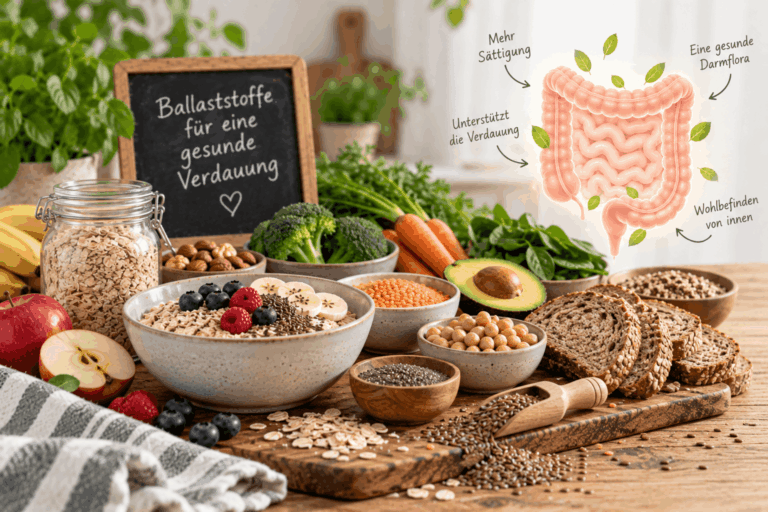
Fiber is an important part of a balanced diet and also plays an important role in digestion. They are found, for example, in vegetables, fruits, whole grain products, legumes, nuts and seeds.
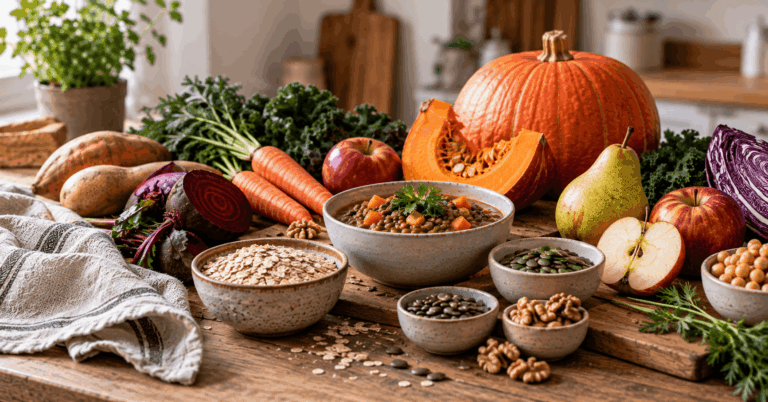
Autumn in particular offers many opportunities to get more fiber on your plate. Apples, pears, pumpkin, carrots, beetroot, cabbage, oatmeal or legumes can be integrated into warm dishes in a variety of ways.
Particularly practical: You don't have to try out complicated recipes.
A porridge with apples and nuts for breakfast, a pumpkin soup for lunch or a lentil stew in the evening can help make your diet richer in fiber.
If you've been eating very little fiber, you shouldn't suddenly increase the amount. A gradual increase and sufficient fluids can be easier for digestion.
2. Drink enough even in cooler temperatures
In summer, the heat often automatically reminds us to drink something. This signal often disappears in autumn.
Your body needs fluids even in cooler temperatures. Water and unsweetened teas are easy ways to drink regularly.
If you don't like cold water in the fall, you can use warm herbal tea, for example. A bottle or cup that you have visible at your workplace can also help you not forget to drink.
An important point: There is no identical amount to drink for every person. The fluid requirement depends, among other things, on body size, activity, diet and other factors.
3. Make warm meals your fall ritual
When the temperatures drop outside, warm dishes have a very special feel-good factor.
Soups and stews are also a practical way to combine many different foods.
How about pumpkin soup with lentils, for example? Or a vegetable stir-fry with whole grain rice and chickpeas? Oatmeal with apple, cinnamon and nuts can also be an uncomplicated autumn breakfast.
It's not about only eating warm foods. It is much more important that your meals remain varied and suit your personal preferences.
4. Keep moving even in autumn
When it's raining, cold and dark outside, it's sometimes harder to pull yourself together. That's exactly why exercise can quickly become a challenge in autumn.
It doesn't have to be intensive training every day.
A walk after dinner, a quick walk through the park or a few extra steps in your everyday life can be a good way to stay active.
Regular exercise supports numerous body functions and can also promote normal intestinal activity.
Particularly nice in autumn: you can combine exercise and mental time out. A walk through the forest or through a park is also a short break from the screen and everyday life.
5. Give fermented foods a place in your diet
Fermented foods can be an interesting addition to a varied diet.
These include, for example, natural yogurt, kefir, sauerkraut or other fermented products. Depending on the food and the manufacturing process, they can contain different microorganisms.
You shouldn't fall for the idea that a single fermented food automatically ensures perfect intestinal health. The overall diet is much more important.
If you tolerate fermented foods well, you can simply incorporate them into your meals regularly and in small quantities – for example, natural yogurt for breakfast or some sauerkraut with a warm meal.
6. Take your time when eating
It's not just what we eat that can play a role. The way we eat is also part of a conscious approach to our meals.
If we work part-time, look at our cell phone or eat under time pressure, we are often less aware of our meal.
Therefore, try to make at least a few meals a day a little quieter.
Sit down, chew thoroughly and take your time with your food. This may sound banal, but it can make a surprisingly big difference in hectic everyday life.
Eating consciously can also help you to better perceive when you are full and which foods are good for you personally.
7. Don't underestimate sleep
In autumn the nights become longer and the evenings cozier. Nevertheless, our sleep rhythm can become unbalanced due to stress, screen time or an irregular daily routine.
Sufficient restful sleep is important for general health and is therefore also part of a holistic routine for well-being.
For example, you can create a fixed evening routine: dim the lights, put your cell phone away earlier, drink tea, read or simply consciously switch off for a few minutes.
You don’t have to make it a complicated wellness program. Small, regularly recurring rituals are often the easiest to implement.
8. Create small islands to combat autumn stress
The connection between the brain and digestion is often referred to as the gut-brain axis. That's why it's worth keeping an eye on your own stress level.
Of course, you can't just switch off stress. But you can try to regularly incorporate small breaks into your everyday life.
Maybe that's ten minutes in the fresh air, a walk, a warm bath, music or a cup of tea without scrolling on your phone.
Especially if you tend to want to function constantly in everyday life, small breaks like this can be valuable.
After all, intestinal health doesn’t just mean eating as “perfectly” as possible.
9. Add more variety to your plate
A varied diet provides your body with different nutrients and different plant foods.
Instead of concentrating on a few supposed “superfoods”, you can try combining different foods with each other on a regular basis.
In autumn, for example, apples, pears, pumpkin, carrots, beets, potatoes, sweet potatoes, cabbage, oats, lentils, beans, nuts and seeds are ideal.
You can easily proceed according to the principle: What haven't I eaten this week?
Maybe pumpkin will end up on the plate today, lentils tomorrow and an apple with oatmeal and nuts the day after.
This automatically creates more diversity.
10. Listen to your body’s signals
One of the most important habits for your digestion is also one of the simplest: observe how your body reacts.
Because not every food is tolerated equally well by every person.
For example, if you notice that certain foods regularly cause discomfort, it may make sense to monitor your diet and habits more closely.
However, you shouldn't be too quick to cut more and more foods out of your diet. A diet that is as diverse as possible remains fundamentally valuable.
A small food diary can also be helpful if you want to find out whether certain patterns exist between diet, stress, sleep and digestion.
If you have persistent or severe digestive problems, you should not try to solve the cause through your diet alone, but rather seek medical advice.
Your simple autumn plan for the intestines
You don't have to implement all ten habits at the same time.
On the contrary: if you take on too much at once, a good idea can quickly turn into additional stress.
It's better to start with three small changes:
Morning: A fiber-rich breakfast and a glass of water.
During the day: A short exercise break or a walk.
At evening: A warm, varied meal and then some time to switch off.
Once these habits have become second nature, you can add the next steps.
Conclusion: intestinal health can be simple
Autumn doesn't have to be a time of year in which your digestion gets completely out of rhythm. At the same time, there is no reason to start a strict “intestinal cleanse” or to radically change your diet now.
It makes much more sense to pay attention to the little things that you can integrate into your everyday life in the long term.
Foods rich in fiber, sufficient fluids, regular exercise, varied meals, sufficient sleep and conscious rest form a good basis for a gut-friendly everyday life.
And perhaps that is exactly the most important autumn habit: Not wanting to do everything perfectly.
Your gut doesn’t need perfect nutrition. Above all, he needs a daily routine that suits you in the long term. 🍂