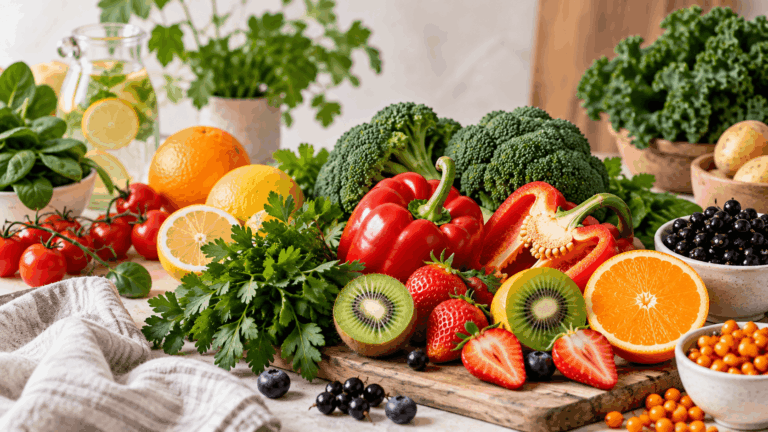
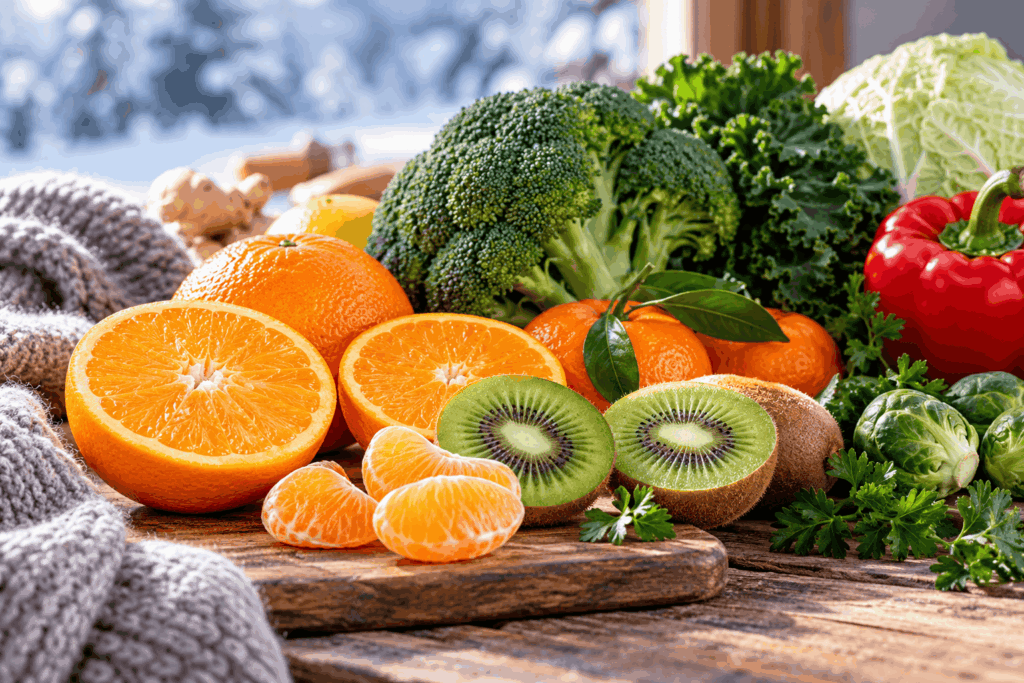
As the days become shorter, the temperatures drop and the cold season begins outside, a balanced diet becomes more important again for many people. Vitamin C in particular is a common topic during this time. The vitamin supports the normal function of the immune system and takes on other important tasks in the body.
But which foods contain a particularly high amount of vitamin C? Does it always have to be lemons and oranges? And how can you easily cover your daily needs even in winter?
The good news: You don't need exotic superfoods or expensive nutritional supplements to get enough vitamin C. Many local vegetables and fruits as well as some typical winter vegetables provide valuable amounts of the vitamin.
In this article you will find out which vitamin C-rich foods are particularly suitable for the cold season, how you can integrate them into your everyday life and what you should pay attention to when preparing them.
Why is vitamin C so important in winter?
Vitamin C, also known as ascorbic acid, is a water-soluble vitamin that the human body cannot produce itself. That's why we have to get it regularly through food.
Especially in winter, many people pay more attention to their vitamin supply. It's not just about colds: Vitamin C fulfills several important functions in the body.
1. Vitamin C supports the immune system
Vitamin C contributes to the normal functioning of the immune system. It supports various immune defense processes and helps to protect cells from oxidative stress.
However, it is important to have realistic expectations: lots of vitamin C does not automatically mean that you will stay cold-free all winter long. High additional intake has not been proven to prevent colds in the general population. It is crucial to regularly supply the body with the nutrients it needs.
2. It protects cells from oxidative stress
So-called free radicals are created in the body during various metabolic processes. In larger quantities, these molecules can damage cells. Vitamin C acts as an antioxidant and helps protect cells from oxidative stress.
In addition to vitamin C, a varied diet with fruit and vegetables also provides other antioxidant plant substances.
3. It is important for skin, connective tissue and wound healing
Vitamin C is needed for normal collagen formation. Collagen is a structural protein that is important for skin, blood vessels, bones, cartilage and gums, among other things.
Vitamin C also contributes to normal wound healing by taking part in the necessary processes.
4. It improves the absorption of vegetable iron
Another advantage: Vitamin C improves the absorption of iron from plant foods. This is interesting, for example, if you often eat oatmeal, legumes, whole grain products or vegetables.
A simple tip: combine iron-rich foods with vitamin C-rich ingredients. A squeeze of lemon juice over a lentil salad or some peppers with a meal containing legumes can improve iron absorption.
How much vitamin C does the body need every day?
According to the current reference values of the German Nutrition Society (DGE), the recommended vitamin C intake for adults is 95 milligrams daily for women and 110 milligrams for men.
Other recommendations apply to certain life situations. For example, pregnant women need 105 milligrams and breastfeeding women 125 milligrams daily. The recommended amounts are also higher for smokers.
You don't have to calculate these values exactly for every meal. If you eat different types of fruit and vegetables every day, your needs can usually be easily met through your diet.
Even a portion of peppers, a kiwi or a combination of potatoes and cabbage vegetables can make a significant contribution to your vitamin C supply.
The 10 best vitamin C-rich foods for winter
It's not just citrus fruits that provide vitamin C. Various types of cabbage, peppers, kiwis and frozen fruits can also be a valuable addition to the diet.
The following foods are particularly practical for the cold season.
1. Red peppers
Red pepper is one of the vegetables that is particularly rich in vitamin C. It contains approximately 140 milligrams of vitamin C per 100 grams when raw. The actual content may vary depending on the variety and storage.
Here's how you can eat them in winter:
- As a crunchy raw food for breakfast or dinner
- In a colorful salad with parsley
- As an ingredient for a vegetable stir-fry
- Finely sliced on wholemeal bread
If you want to enjoy peppers as rich in vitamins as possible, eat them raw occasionally. Some of the vitamin can be lost during prolonged or strong heating.
2. Broccoli
Broccoli is a versatile winter vegetable and, in addition to vitamin C, provides fiber and other micronutrients.
Depending on how it is prepared, broccoli contains different amounts of vitamin C. A portion of around 200 grams can cover a large part of your daily requirement.
Here's how you can use broccoli:
- As a side dish with potatoes
- In a creamy vegetable soup
- With whole wheat pasta and a light sauce
- In an oven dish with other vegetables
A practical tip: Steam broccoli as briefly as possible until it is cooked but still firm to the bite. This way you avoid unnecessarily long cooking times.
3. Brussels sprouts
Brussels sprouts are a classic winter vegetable that are ideal for a varied diet. It provides vitamin C and fiber and can be prepared in different ways.
Brussels sprouts are particularly practical if you eat warm meals more often in winter and don't want to miss out on vitamin-rich vegetables.
Ideas for your kitchen:
- Oven Brussels sprouts with potatoes
- Steamed Brussels sprouts as a vegetable side dish
- A winter vegetable pan with carrots
- Brussels sprouts in a warm lentil dish
If you haven't enjoyed Brussels sprouts yet, try them in the oven. Roasting changes its aroma and to many people it tastes milder than cooked.
4. Kale
Kale is one of the typical winter vegetables and can also contribute to the supply of vitamin C. It also provides fiber and other valuable nutrients.
The nutrient content depends, among other things, on whether you use fresh or frozen kale and how long you cook it.
This is how you integrate kale into your everyday life:
- As a classic vegetable dish
- In a potato and kale pan
- In a vegetable soup
- Finely sliced as part of a vegetable stir-fry
You don't always have to prepare kale traditionally. With potatoes, legumes and mild spices, it can also be integrated into modern everyday dishes.
5. Brussels sprouts and other types of cabbage
In addition to kale and Brussels sprouts, other types of cabbage are also interesting sources of vitamin C. These include, for example, white cabbage, red cabbage and cauliflower.
Cabbage is particularly practical in winter because it can be prepared in many ways and is often available as a regional or seasonal vegetable.
For example, red cabbage tastes great as a raw vegetable salad with apple, while white cabbage works well in soups or stews. You can steam cauliflower, cook it in the oven or make it into a creamy soup.
Variety is important: Not every type of cabbage has to end up on your plate every day. Even if you regularly incorporate them into your diet, you will benefit from their nutritional diversity.
6. Kiwi
Kiwis are an easy way to get vitamin C through fruit. They are available in stores all year round and are particularly suitable for breakfast and snacks.
Depending on its size and variety, a kiwi can provide a significant portion of your daily vitamin C requirement.
This is how you can eat kiwis:
- Pure as a snack
- In a bowl with oatmeal
- Together with natural yogurt or a plant-based alternative
- As part of a fruit salad
If you don't have much time in the morning, you can simply take a kiwi with you and eat it later. Healthy eating doesn't have to be complicated to work in everyday life.
7. Oranges and tangerines
For many people, oranges and tangerines are simply part of winter. They provide vitamin C, taste fresh and are easy to eat as a snack.
Even though lemons are often considered the epitome of vitamin C, other foods sometimes contain significantly more of it per 100 grams. Nevertheless, oranges and tangerines are valuable sources of vitamin C because they are consumed in normal portions and can be easily integrated into everyday life.
Practical ideas:
- An orange for breakfast
- Tangerines as a snack on the go
- Orange pieces in a winter salad
- Fresh orange pieces in natural yogurt
If possible, eat the fruit whole. This gives you additional fiber, some of which is lost during juice preparation.
Easily prepare fresh citrus fruits
If you like to squeeze fresh oranges or use lemon juice for salad dressings, a manual citrus press can be helpful in everyday life. It takes up little space in the kitchen and is quickly ready for use.
[Hier kannst du eine praktische Zitruspresse für Orangen und Zitronen ansehen.]
Remember: Whole oranges provide additional fiber. Although freshly squeezed juice can contain vitamin C, it should not generally replace whole fruit.
8. Potatoes
Potatoes are often underestimated when it comes to vitamin C. Although they contain less vitamin C per 100 grams than many other foods on this list, they can make an important contribution to the supply due to the amount consumed.
They are also versatile, filling and can be used in many winter dishes.
Here's how you can use potatoes:
- As boiled potatoes with vegetables
- In a potato soup
- As baked potatoes
- In a stew with cabbage and other vegetables
The preparation also plays a role here. Some vitamin C can pass into the water when cooking or be lost through heat. If you use the cooking water for soup, for example, you can use some of the water-soluble nutrients.
9. Sea buckthorn
Sea buckthorn is known for its high vitamin C content. The orange berries are very sour and are therefore often offered as juice, fruit preparations or as part of other products.
When it comes to sea buckthorn products, it's worth looking at the list of ingredients. Some products contain added sugar or only contain a small amount of sea buckthorn.
For example, you can dilute sea buckthorn in small amounts with water or – if you tolerate it well – use it as part of a fruit preparation.
Important: A particularly high vitamin C content per 100 grams does not automatically mean that the food needs to be eaten in large quantities. The actual portion size and the rest of your diet also count.
10. Parsley
Parsley is more than just a decorative garnish. Fresh parsley contains a comparatively high amount of vitamin C and can be a useful addition to many everyday dishes.
You don't need large quantities for this. Even a small handful can make dishes more aromatic and make an additional contribution to the vitamin supply.
How to use parsley:
- Finely chopped over potatoes
- In a salad with peppers
- As an ingredient in a herb quark
- Sprinkled over soup after it has cooled slightly
If you want to use parsley as gently as possible, add it towards the end of the preparation.
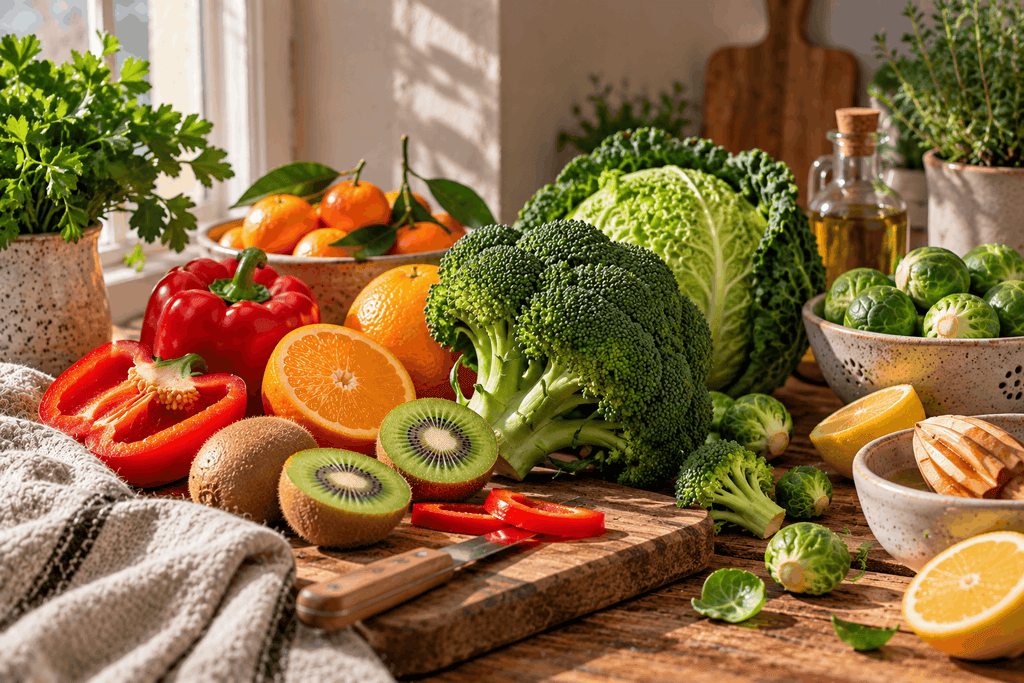
Vitamin C content: Which foods provide the most?
The following overview shows approximate orientation values. Actual quantities may vary depending on variety, freshness, storage and preparation.
| Groceries | Vitamin C per 100g, approximately |
|---|---|
| Rose hips | 1,250 mg |
| Sea buckthorn berries | 450 mg |
| Blackcurrants | 170 mg |
| Fresh parsley | 160 mg |
| Red pepper, raw | 140 mg |
| Broccoli, cooked | 90 mg |
| lemon | 50 mg |
The values for rose hips and sea buckthorn refer to foods that are particularly rich in vitamin C or reference information and cannot easily be transferred to every processed product. The values for other foods can also vary.
What does this mean for your everyday life?
You don't have to specifically look for the food with the highest vitamin C content. Although rose hips and sea buckthorn contain exceptional amounts of vitamin C, they are often consumed in smaller quantities. Red peppers, broccoli, kiwi, oranges and potatoes, on the other hand, can easily be eaten in normal portions.
It therefore makes most sense to have a mixture of different foods that you like and use regularly.
This is how you integrate more vitamin C into your everyday winter routine
You don't have to completely change your diet to get more vitamin C. Small changes that can be implemented without much effort are often enough.
1. Add a portion of fruit to your breakfast
If you eat oatmeal, cereal or bread in the morning, you can add a kiwi or an orange to your breakfast. This is uncomplicated and provides more variety.
2. Plan vegetables for hot meals
Especially in winter, many people like to eat soups, stews and casseroles. Use these dishes to incorporate broccoli, Brussels sprouts, kale, or other types of cabbage.
3. Use frozen vegetables
Frozen vegetables can be a practical alternative to fresh produce. It is easy to portion, has a long shelf life and, depending on the product and storage, can be a good source of nutrients.
Be careful not to cook the vegetables for an unnecessarily long time.
4. Use fresh herbs
Parsley and other herbs add flavor to the plate. If you add them just before serving, you can avoid unnecessary loss of vitamins due to long heating.
5. Combine different foods
You don't have to rely on a single source of vitamin C. A combination of fruits, vegetables and potatoes makes it easier to meet your needs.
How is as much vitamin C as possible preserved during cooking?
Vitamin C is water soluble and sensitive to heat and oxygen. Therefore, some of the vitamin may be lost during storage and preparation.
You can reduce unnecessary losses with a few simple habits:
- Wash briefly: Wash fruits and vegetables thoroughly, but do not leave them in water for an unnecessarily long time.
- Cut just before eating: Food that is cut into small pieces has more surface area through which it comes into contact with oxygen.
- Cook gently: Steaming is often cheaper than cooking for a long time in a lot of water.
- Shorten cooking times: Vegetables do not have to be cooked soft if they taste al dente.
- Reuse cooking water: Soups and stews can leave water-soluble nutrients in the dish.
- Consume fresh food promptly: Very long storage times can reduce the vitamin content.
This doesn't mean you should only eat vegetables raw. Cooked vegetables are also valuable. What is crucial is a balanced diet that fits your everyday life.
Practical kitchen helper: cook vegetables gently
If you frequently prepare broccoli, Brussels sprouts or other winter vegetables, a steamer insert for your cooking pot can be a practical addition. This allows vegetables to be cooked with steam without them being completely submerged in the cooking water. This can help reduce losses of water-soluble nutrients.
[Here you will find a suitable steamer insert for vegetables.]
My tip: Look for stainless steel, a suitable size for your cooking pot and easy cleaning.
Do you need vitamin C supplements in winter?
Vitamin C preparations are often advertised, especially in the cold season. For healthy adults who eat a balanced diet, routine intake is usually not necessary.
The recommended intake can usually be achieved through food. High-dose vitamin C supplements have not been proven to prevent colds in the general population and are not a substitute for a varied diet.
Supplementation may be useful in certain situations, such as when a deficiency has been identified or the diet does not adequately meet requirements. If you are unsure, medical or nutritional advice can help.
More is not automatically better. For example, very high amounts of vitamin C can cause gastrointestinal problems. People with certain illnesses should seek medical advice before taking high-dose preparations.
Three simple ideas for vitamin-packed winter meals
Would you like to get started straight away? These ideas show how you can easily integrate foods rich in vitamin C into your diet.
Breakfast: oatmeal with kiwi
You need:
- oatmeal
- Milk or a plant-based alternative
- A kiwi
- Some cinnamon if desired
Prepare your oatmeal as usual and slice the fresh kiwi on top. This gives you a simple breakfast idea that combines carbohydrates, fiber and vitamin C.
Even more ideas for your breakfast
If you like trying new combinations of fruits and vegetables, a blender can be a handy addition. For example, you can use this to process kiwi, berries and other ingredients into a smoothie. Models that are easy to clean and require little space are particularly uncomplicated.
[Hier findest du einen passenden Smoothie-Mixer für deine Küche.]
For a balanced diet, it is worth eating fruits and vegetables whole on a regular basis so that you benefit from the fiber they contain.
Lunch: Potatoes with broccoli and parsley
You need:
- potatoes
- broccoli
- Fresh parsley
- Some oil and spices to taste
Boil the potatoes and steam the broccoli as briefly as possible. Finally, add fresh parsley over the dish. This way you combine two everyday foods with an additional source of vitamin C.
Dinner: Colorful pepper salad with orange pieces
You need:
- Red pepper
- Orange pieces
- Leaf salad of your choice
- Some olive oil and lemon juice
Chop the ingredients into small pieces and mix them with a simple dressing. The combination of peppers and orange provides fresh flavors and provides vitamin C.
A notice: If you don't tolerate certain foods, you can adjust the recipes accordingly. Not every fruit and vegetable is equally suitable for every person.
Frequently asked questions about foods rich in vitamin C in winter
Which food contains the most vitamin C?
Foods that are particularly rich in vitamin C include rose hips, sea buckthorn, black currants and peppers. Rose hips can contain around 1,250 milligrams of vitamin C per 100 grams in reference information. The actual values depend on the food and its processing.
Which winter vegetables contain a lot of vitamin C?
Broccoli, Brussels sprouts and kale are good examples of vitamin-rich vegetables that are suitable for warm winter meals. Other types of cabbage can also contribute to the vitamin supply.
Is one orange a day enough?
One orange can cover a significant portion of your daily vitamin C needs. Whether it alone is sufficient depends, among other things, on its size and your individual needs. But you don't have to rely on a single source: a varied diet makes supply easier.
Does vitamin C help against colds?
Vitamin C supports the normal function of the immune system. However, high additional intake has not been proven to prevent colds in the general population. Adequate supply makes sense, but vitamin C is not a protective shield against all infections.
Are raw vegetables healthier than cooked vegetables?
Raw vegetables can provide a particularly high amount of vitamin C because the vitamin is sensitive to heat. However, gentle cooking does not automatically mean that all nutrients are lost. Both types of preparation can be part of a balanced diet.
Can you also get vitamin C from frozen vegetables?
Yes. Frozen vegetables can be a good source of vitamin C. The nutrient content depends, among other things, on processing, storage and preparation. It's a practical way to eat vegetables even out of season.
Should you take high doses of vitamin C as a preventive measure?
For healthy people who meet their needs through their diet, routine use of high-dose vitamin C supplements is usually not necessary. If you suspect a deficiency or have special health circumstances, you should seek professional advice.
Conclusion: Get through the winter well with simple foods
Vitamin C is an important nutrient that, among other things, supports the normal function of the immune system, contributes to collagen formation and improves the absorption of plant iron.
There are numerous ways to get enough vitamin C, especially in winter. Peppers, broccoli, Brussels sprouts, kale, kiwi, oranges and potatoes are easy to integrate into your everyday life. Parsley and sea buckthorn can also be a useful addition to your diet.
You don't need complicated nutritional rules or expensive nutritional supplements. Rather, concentrate on eating a variety of fruits and vegetables on a regular basis and preparing foods as gently as possible.
My tip: For the coming week, choose two or three vitamin C-rich foods that you like to eat and consciously plan them into your meals. Small, realistic changes are often easier to implement permanently than strict nutritional plans.
This way you can make your diet more varied step by step – even when it's cold and uncomfortable outside.
Are you looking for more inspiration for your winter kitchen?
A seasonal vegetable cookbook can help you discover new recipes using broccoli, cabbage, potatoes, and other winter ingredients. Cookbooks with simple recipes and ingredients that you can find in regular supermarkets are particularly practical.
[Hier findest du ein passendes Kochbuch mit saisonalen Gemüsegerichten.]