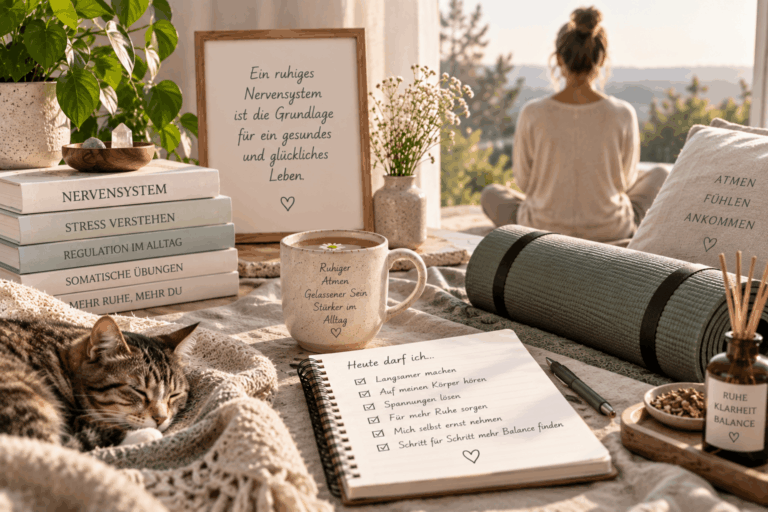

If your head never takes a break, thoughts go on a merry-go-round and even rest feels “exhausting”, then journaling is not a trend – but a real tool. Not esoteric, not cheesy, but honest, clarifying and often surprisingly effective.
This article is deliberately Pinterest-friendly, SEO friendly and at the same time deep enough for people who really want to make a difference. And: I'll show you specific placeswhere you make sense You can link products, freebies or your own content – without seeming intrusive.
Why journaling is so powerful (and often underestimated)
Self-reflection brings order inside. Not because problems disappear – but because they tangible become. Writing activates different areas of the brain than thinking. Feelings become slower, clearer, more sorted. This is exactly where inner peace arises.
Journaling is:
- mental relief
- emotional self-regulation
- Clarity for decisions
- a safe space without judgment
And best of all: it's available at any time. No subscription. No coach. No need to “work”.
1. The classic reflection journal – for clarity & self-knowledge
Who is suitable for:
People who often ask themselves:
- Why do I react like this?
- What actually triggers me?
- What do I really need right now?
Typical content:
- open questions (“What was on my mind today?”)
- Emotional reflection
- Recognize thought patterns
- Weekly or monthly reviews
Why it works:
You learn yourself observe rather than judge.
2. Gratitude journal – small islands of calm in everyday life
Gratitude is not an “everything is great” mantra. When used correctly, it works grounding, especially when there is inner restlessness.
Who is suitable for:
- when pondering
- when stressed
- with emotional exhaustion
- as an evening routine
Typical content:
- 3 things that were good today
- small moments (not just big successes)
- Body perception
- conscious end of the day
3. Mindfulness & Emotions Journal – when emotions overwhelm
This journal goes deeper. It doesn't help with "writing away", but with Understand.
Ideal for:
- emotional overload
- inner unrest for no clear reason
- Stress reactions in the body
Typical elements:
- “What am I feeling right now – physically & emotionally?”
- Recognize triggers
- Breathing or body scan pulses
- Assessment → Observation
4. This “Words to myself“-Journal – gentle self-accompaniment
This journal is particularly effective for people who are very strict with themselves.
Who is suitable for:
- with self-doubt
- with internal pressure
- with perfectionism
Contents:
- loving self-address
- inner dialogues
- strengthening sentences
- Change of perspective (“What would I say to a friend?”)
5. Evening & morning journals – structure for inner peace
These journals are particularly Pinterest-strong because they Routine + rest combine.
Morning journal:
- How do I want to feel today?
- What is important today?
- What am I grateful for?
Evening journal:
- What am I letting go of today?
- What gave me energy?
- What could be easier tomorrow?
The journal is precisely because of the desire for more clarity and self-compassion “Words to myself” developed. It accompanies you in recording your thoughts – without pressure, without judgment.
Journaling mistakes that prevent inner peace
Yes, that exists too – and it is important to say this clearly:
- ❌ too many rules
- ❌ Perfectionism
- ❌ Write “because you have to”
- ❌ Comparison with others
Journaling works when it honest, simple and regular is – not beautiful, not perfect.
How to monetize journals cleverly (without selling them clumsily)
Honestly: Journals are perfect for your business.
Why?
- high trust factor
- emotional benefit
- ideal for Pinterest
- recurring purchases
Smart placements:
- a subtle note after each journal section
- personal recommendation instead of sales pressure
- Linking to value-added content
Example:
“If you want a solid structure for this, you will find a journal here that was developed for exactly that.”
Journaling as a daily anchor in turbulent times
Especially in phases when everything outside seems fast, loud or uncertain, a journal can become a solid internal anchor. It's a place that stays – regardless of how chaotic the day was. Just a few minutes of writing signals to the nervous system: I can arrive. This regularity creates security and this is exactly what creates inner peace. Not suddenly, but quietly and steadily.
Journaling & Nervous System: Why writing calms you internally
Many people intuitively realize that writing is good for them – but cannot explain why. In fact, journaling has a direct effect on the nervous system. When thoughts only circulate in your head, they often remain disordered and emotionally charged. By writing them down, they are slowed down, structured and shifted from the inside to the outside. This process alone can bring noticeable relief.
Something crucial happens when journaling: feelings become language. And what can be named appears less threatening. The nervous system registers security because internal states are no longer diffuse but tangible. Writing in the evening, in particular, helps many people mentally end the day, let go of tension and fall asleep more peacefully. Journals become a gentle form of self-regulation – without pressure, without technology, without any claim to “right or wrong”.
Journaling can help you get back to your own pace, especially in stressful phases of life. Not to solve problems immediately, but to listen to yourself. This form of inner attention is often the first step towards greater inner peace.
You can also take a look at the following article: Calming the nervous system: Why your body doesn't switch off and what really helps
Why handwritten journaling is particularly calming
Even if digital tools are practical, handwriting has a deeper impact. The movement of the hand slows down the flow of thoughts, emotions can be released more gently and remain less diffuse. Many people report that writing with a pen helps them “get to themselves” quicker than typing. Journals thus become a conscious counterpoint to digital sensory overload.
An example: This is what a journaling day for more inner peace could look like
Many people don't start journaling because they don't know What they should actually write. There is no need for long texts or in-depth analysis. Just a few clear questions can be enough to promote inner peace.
A quick check-in in the morning can help you start the day more consciously. A simple question like: “How am I feeling right now – and what do I need today?” creates clarity without building up pressure. It's not about being productive, it's about being honest.
A short reflection during the day or in the afternoon can be helpful, especially when stress arises. A sentence like: “What made me tense inside today?” or “What just did me good?” helps to perceive emotions instead of pushing them away.
In the evening, the journal can become a haven of calm. Questions like: “What can I let go of for today?” or “What gave me a little moment of peace today?” support the transition to the end of the workday. This is exactly where journals have their strongest effect – as a silent companion that does not judge, but rather gives space.
Journals as silent companions on the way to more self-confidence
Anyone who reflects regularly recognizes patterns: old beliefs, recurring doubts, but also progress that would otherwise be overlooked. Journals not only record thoughts, but development. This is exactly what strengthens self-confidence in the long term – not through motivation from outside, but through real self-knowledge. Inner peace often arises precisely when you understand yourself better.
Conclusion: Journaling is not a trend – it is self-management
Inner peace does not come from “thinking less”, but through better understanding. Journals are one of the most effective tools for this – quiet, honest and sustainable.
And the beauty:
You can do that help others and at the same time build your own business. Win-win – no volume, no pressure.
Frequently asked questions about journals, self-reflection & inner peace
How often should you journal to find inner peace?
There is no fixed “right” or “wrong.” For many people, writing two to three times a week is enough to notice a noticeable effect. Regularity is more important than frequency. Journaling should relieve the burden – not become a chore. Just a few minutes of conscious writing can help to organize your thoughts and reduce inner restlessness.
How long should a journaling session last?
The same applies here: less is often more. Five to ten minutes is enough, especially at the beginning. Inner peace does not come from long texts, but from honest introspection. If you have more time or want to reflect more deeply, you can of course extend your journaling – but it is not a must.
What do I do if I can't think of anything?
This feeling is very common and completely normal. In such moments, simple introductory questions like: “What’s on my mind right now?” or “How does my body feel right now?” Even just writing down a few keywords is completely sufficient. Journaling can be chaotic, incomplete and raw – that's exactly where its effect lies.
Do I have to write nice or positive things when journaling?
No. Journaling is not a sugarcoating of life. There is room for difficult thoughts or unpleasant feelings. Inner peace often only arises when the unpleasant can be seen. Gratitude and positive reflections can complement, but should not force, that everything has to feel “good”.
Is journaling more useful in the morning or evening?
Both have their advantages. Morning journaling can help create clarity for the day and align yourself internally. Evening journaling often has a particularly calming effect because thoughts are consciously closed. Many people combine both – others intuitively choose the time that feels right.
Can journaling also help if you are very restless or stressed?
This is precisely when journaling can be particularly valuable. Writing helps to make inner tension visible and get it out of your head. It does not replace therapy, but can be a gentle, everyday support to help you become more aware of stress and deal with it better.
Do I need a special journal or will a blank notebook suffice?
Both are possible. A blank notebook offers maximum freedom, while journals provide structure and make it easier to get started. Many people find predetermined questions to be a relief, especially when they are feeling restless or lacking orientation, because they don't have to think about what to start with.
If journaling is generally good for you, but you sometimes don't have the right words, a journal like this can help “Words to myself” be a gentle support in everyday life.