Recognize, understand and specifically correct iron deficiency – the underestimated energy robber
Tired. Driveless. Concentration problems. Brittle nails. Hair loss.
Many people blame these symptoms on stress, lack of sleep or everyday life – this is often the case Iron deficiency behind it. And it's more widespread than you think.
Women, people with a plant-based diet or people with chronic stress are particularly affected. The common thing: iron deficiency develops gradually. You somehow continue to function – but never with full energy.
In this article you will find out well-founded, understandable and without scaremongering:
- what iron deficiency really is
- how to correctly classify symptoms
- what are the causes behind it
- how nutrition can specifically help
- when supplements make sense
- and which Amazon products have proven themselves
What exactly is iron deficiency?
Iron is a vital trace element without which your body would not be able to survive. It is centrally involved in numerous processes that take place in your organism every day – usually completely unnoticed as long as there is enough of it.
The most important job of iron is Oxygen transport. Iron is a component of the red blood pigment hemoglobin. This ensures that oxygen is transported from the lungs via the blood to each individual cell. If there is a lack of iron, this transport becomes inefficient – your cells literally receive less energy.
In addition, iron plays a crucial role in:
- the production of energy in the mitochondria
- the normal function of the immune system
- the formation of neurotransmitters in the brain
- concentration and memory performance
- the body's temperature regulation
Iron deficiency occurs when the body lacks more iron over a long period of time than it can absorb or store. The problem is that the body has… no active mechanismin order to specifically excrete iron – but there are several factors that can block the absorption.
It is important to understand: Iron deficiency does not automatically mean anemia. Many people already have clear symptoms even though their hemoglobin level is still within the normal range. The iron store (ferritin) has often been empty for a long time.
Typical symptoms – and why they are often not taken seriously
Iron deficiency is a master of disguise. The symptoms are often diffuse, non-specific and develop gradually. This is precisely why it is so often overlooked or trivialized.
The most common signs include:
- persistent fatigue despite getting enough sleep
- rapid physical and mental exhaustion
- Difficulty concentrating and memory
- Headache or migraine
- Dizziness or lightheadedness
- Shortness of breath during light exertion
- pale skin or dark circles under the eyes
- Hair loss or thinning hair
- brittle nails, grooves or white spots
- cold hands and feet
- inner restlessness or depressive moods
Many of those affected function in “energy saving mode” for years. You come to terms with the feeling that you will never really be productive. Particularly problematic: These symptoms are often psychologized or blamed on stress.
The following applies: A body with iron deficiency cannot provide constant energy. No matter how good your mindset is or how hard you pull yourself together.
Those who are particularly frequently affected
Iron deficiency can basically affect anyone – but some groups are much more likely to:
Women
- through menstruation
- during pregnancy & breastfeeding
- with hormonal fluctuations
People with a vegetarian or vegan diet
- Vegetable iron is less absorbed
People with stress
- Stress increases iron requirements
- Stress can inhibit absorption
Very active people in sports
- Loss of iron through sweat
- higher oxygen requirements
People with gastrointestinal problems
- limited iron absorption
Test for iron deficiency – these values are crucial
A normal blood count is often enough not out of.
Important laboratory values are:
- Ferritin (iron stores)
- hemoglobin
- Transferrin
- Transferrin saturation
Particularly important: Ferritin.
Many doctors consider values above 15 ng/ml to be “normal”. From a functional point of view, however, many people are just starting to feel it 40-70 ng/ml really powerful.
👉 Don't let yourself be fobbed off here. Your well-being counts.
Absorb iron through your diet – what really helps
A diet rich in iron is the basis – both for prevention and to support existing deficiency. It's not just the quantity that matters, but above all the Bioavailability.
Heme iron vs. non-heme iron
Animal foods contain so-called heme iron. The body can absorb this much more efficiently. Plant sources of iron provide non-heme iron, the absorption of which depends more heavily on accompanying factors.
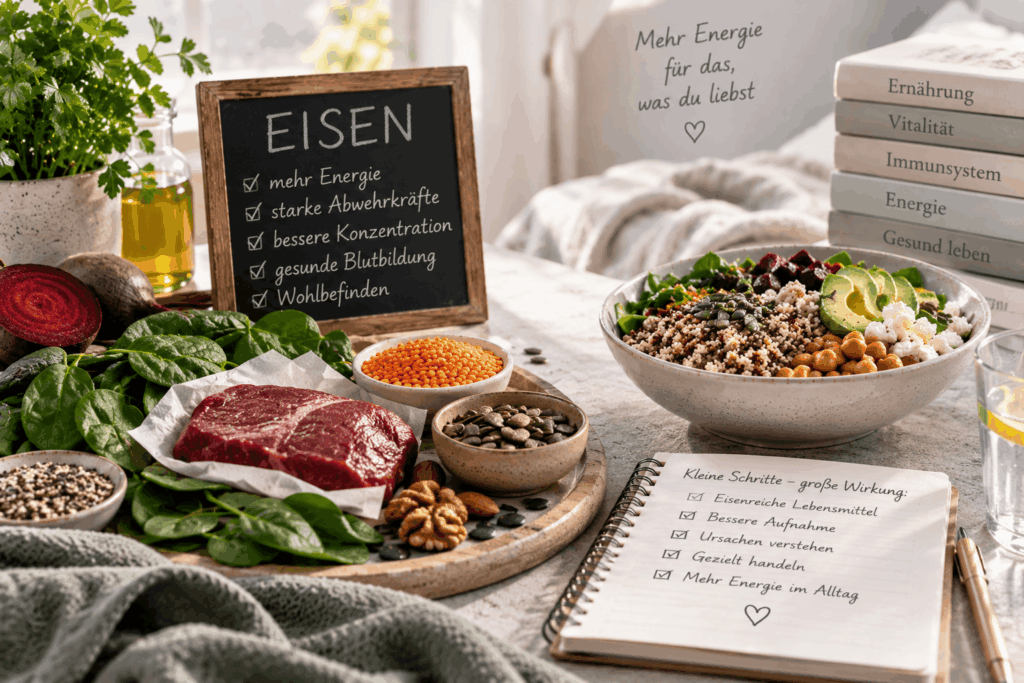
Good animal sources of iron
- red meat
- Offal (especially liver)
- egg yolk
Good plant sources of iron
- Lenses
- Chickpeas
- white beans
- oatmeal
- millet
- Quinoa
- Pumpkin seeds
- sesame
- spinach
These factors improve iron absorption
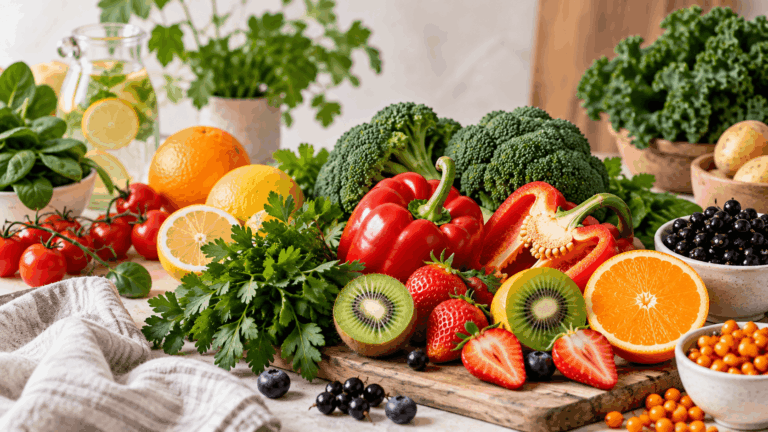
- Vitamin C (e.g. peppers, berries, citrus fruits)
- Fermented foods
- A gap of at least 1-2 hours from coffee, tea and dairy products
A conscious combination is crucial, especially with a vegetarian or vegan diet. Without this knowledge, iron absorption often remains well below requirements.
When nutritional supplements make sense
In theory, it sounds good to compensate for iron deficiency solely through diet. In practice, however, this rarely works – especially if the defect has existed for a long time.
A nutritional supplement can be useful:
- with low ferritin levels
- with severe or long-lasting symptoms
- if there is increased need (menstruation, pregnancy, breastfeeding)
- with limited iron absorption via the intestine
What is important is not just the dosage, but above all the form of iron. Many classic preparations cause gastrointestinal problems, which often leads to premature discontinuation.
Modern forms of iron such as iron bisglycinate or plant sources of iron are often significantly better tolerated and are therefore suitable for long-term use.
Proven iron supplements
1. Iron bisglycinate – well tolerated
- high bioavailability
- stomach-friendly
- ideal for sensitive people
👉 Example on Amazon: (see link below)
2. Iron + Vitamin C combo
- better recording
- practical for everyday life
👉 Example on Amazon: (see link below)
3. Liquid iron
- quick recording
- good for severe deficiency
👉 Example on Amazon: (see link below)
4. Vegetable iron from curry leaf
- natural alternative
- often very well tolerated
👉 Example on Amazon: (see link below)
Iron deficiency & psyche – when it’s not just the body that suffers
Iron deficiency not only affects the body, but also mental health. Many sufferers report symptoms that are initially classified as psychological – even though the cause is physical.
Typical mental signs can include:
- so-called brain fogs (feeling of mental fogginess)
- Concentration problems
- irritability
- inner unrest
- depressive moods
- increased susceptibility to stress
This is because iron is involved in the production of important neurotransmitters such as dopamine and serotonin. If there is a lack of iron, this delicate balance becomes unstable.
It is especially important to understand here: You're not imagining these symptoms. Your brain needs iron to think clearly.
Iron deficiency in women – the hormonal connection
Women are particularly often affected by iron deficiency – and there are good reasons for this.
The body regularly loses iron through monthly menstruation. In addition, hormones such as estrogen and progesterone influence iron metabolism.
The following can be particularly critical:
- heavy or long menstrual bleeding
- hormonal contraceptives
- Pregnancy and breastfeeding
- PMS or endometriosis
Many women get used to low energy levels for years because they are told that exhaustion is “normal”. A stable iron balance is an important basis for hormonal balance.
Take iron correctly – the practical guide
In order for iron supplements to work, taking them correctly is crucial.
Dosage:
The recommended dosage depends on the individual deficiency. Therapeutic doses are often between 15 and 50 mg of elemental iron per day.
Time:
Iron is best taken on an empty stomach or with vitamin C. Many people tolerate it better in the morning or evening.
Note distance:
- At least 1-2 hours away from coffee, tea and dairy products
- Do not take magnesium and calcium at the same time
Duration:
Even if symptoms improve, supplements should often be taken for several months to really replenish iron stores.
Classification based on experience – what many of those affected report
Many readers report that they have lived with fatigue, concentration problems or hair loss for years without knowing a clear cause.
Only through targeted blood tests and consistent iron intake did the energy slowly return. Not overnight – but noticeably.
This experience shows that iron deficiency is not a sign of weakness. But often the result of a body that is constantly overwhelmed.
Common mistakes with iron deficiency
- dosage too low
- irregular intake
- Take with coffee or tea
- Discontinuing it too early when there is first improvement
- lack of blood tests
👉 Building up iron stores takes time – patience pays off.
Frequently asked questions about iron deficiency (FAQ)
How long does it take for iron supplements to work?
Depending on the initial value and dosage, the first improvements can be noticeable after 2-4 weeks. It often takes several months to completely replenish iron stores.
Can you take too much iron?
Yes. Iron should not be taken in high doses on a long-term basis without monitoring. Regular blood checks are useful.
Is iron deficiency dangerous?
If left untreated, iron deficiency can put a strain on performance, the immune system and, in the long term, the cardiovascular system.
Why does nutrition alone often not help?
If there is a shortage, food intake is often not enough to fill the stores in a timely manner.
Which iron is best tolerated?
Many people tolerate iron bisglycinate or plant-based forms of iron much better than classic iron sulfate.
Recommended iron products
(Note: The following product recommendations contain affiliate links. If you purchase through one of these links, I will receive a small commission – the price will remain the same for you.)
Iron bisglycinate – stomach-friendly & effective
👉 View now on Amazon: Ferric bisglycinate*
Iron + vitamin C combination
👉 View now on Amazon: Iron + Vitamin C*
Liquid iron for severe deficiency
👉 View now on Amazon: Iron oral solution*
Vegetable iron from curry leaf
👉 View now on Amazon: Organic iron from curry leaf*
Conclusion: Take iron deficiency seriously – regain quality of life
Iron deficiency is not a lifestyle problem. It is a real energy robber – often quiet but effective.
If you are constantly tired, feel weak or your body is sending warning signals, it's worth taking a look.
With the right knowledge, targeted nutrition and sensibly used supplements, you can get your energy back step by step.
✨ Your body works for you every day – support it.
Notice: The content on this website is based on personal experiences and research and does not constitute medical or therapeutic advice. If you have any health or psychological complaints, please contact a doctor or a qualified specialist!